
Extreme Weather Around The World:New Ice Age Begins in 2014
Extreme Weather
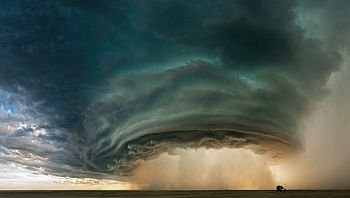
Climate models predict that extreme weather events will become more common, among them intense rainstorms, flooding, heat waves, droughts, and violent storms. There are two reasons for this: Many weather events are caused by high temperatures, and warm air holds more moisture than cool air, allowing more chance for precipitation.
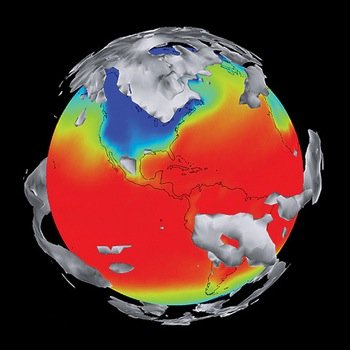
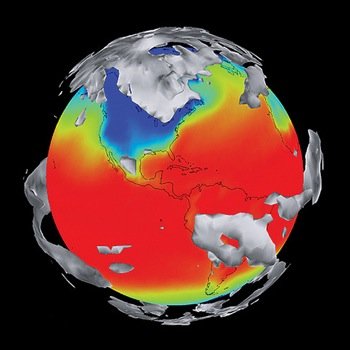
SST will also rise, bringing about more El Niño events and the consequent floods and droughts. Heat waves will increase the most in quantity and severity in warm regions but will also be more common in cooler areas. Commenting on the 2003 European heat wave, British Prime Minister Tony Blair said in 2004, “It is calculated that such a summer is a one in about 800-year event. On the latest modeling, climate change means that as soon as the 2040s at least one year in two is likely to be even warmer than 2003.”
Climate models of the years 2080 to 2099 indicate that both Chicago and Paris will have more heat waves, 25% and 31%, respectively; and their length will increase 64% and 52%, respectively. Precipitation events will also increase, although in some regions summers will be a lot drier and droughts will become more common. Researchers have conflicting ideas on whether global warming will increase the number of hurricanes. Warmer SST will allow more storms to form, but higher air temperatures will increase the wind shear between the lower and upper atmosphere, causing many developing storms to be decapitated. Several researchers agree that warmer SST could increase the number of storms. A model by Matthew Huber and Ryan L. Sriver of Purdue University, published in Geophysical Research Letters in 2006, indicates that a one-quarter-degree increase in average global temperature wills double the intensity and frequency of hurricanes. Kerry Emanuel and Michael E. Mann at Pennsylvania State University attribute the recent rise in hurricane activity to increasing SST. They suggest that the most recent period of low hurricane activity was not due to natural variations but due to global dimming, and that a further decrease in aerosol pollution could increase hurricane activity even more.
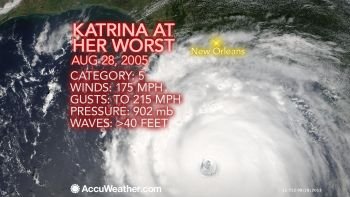
The hurricanes of the future will certainly be more intense. A summary of 1,200 simulations, published in the Journal of Climate in 2004, showed that rising levels of greenhouse gases could triple the number of Category 5 hurricanes. Climate models show that by 2080, each hurricane will be about one-half point higher on the Saffir-Simpson scale than the current average, with a resulting 20% increase in rainfall. A study by the United States Federal Emergency Management Agency (FEMA) found that a one-foot (30 cm) sea level rise would increase flood damage by hurricanes by 36% to 58%.
Human Health
Increases in extreme weather events will take a toll on human health; for example, an increase in heat waves will trigger a rise in heat-related deaths. Losses of agricultural productivity and clean water supplies will also be felt. By 2030, climate-related deaths by malnutrition and diarrhea will increase noticeably.
Microbes are held in check by colder winters and colder nights. Warmer temperatures will continue to allow diseases to expand their ranges, and increased food poisoning will strike the temperate regions as parasites spread. For example, ciguatera and other fish and shell-fish poisoning will spread into the warmer seas. Heavy rainfall could increase outbreaks of waterborne disease; a recent example is the parasitic infections that sickened 400,000 people in Milwaukee in 1993 following the heaviest rainfall in a single month in 50 years. The expansion in the range of insect pests from tropical and sub-tropical regions to temperate zones will spread the diseases they carry into places where they have never been before. Some of the diseases that are expected to proliferate are malaria, encephalitis, yellow fever, dengue fever, and cholera. The expansion of diseases into new areas has already taken place; for example, tick-borne encephalitis was unknown in Sweden until the mid-1980s. The warming of the Kenyan highlands may have allowed malaria to spread into the region in the past 20 years (although other factors, such as the banning of the pesticide DDT, may also be involved).
Extremely dry conditions also contribute to the spread of disease. The 1999 outbreak of West Nile virus in New York corresponded with a severe drought, while African dust caused by climate change has been linked to respiratory disease in the Caribbean.
Wrap-Up
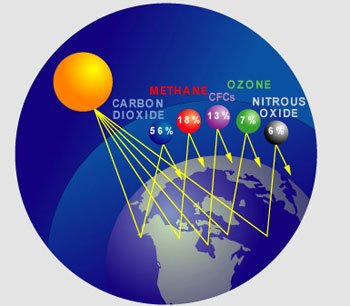
Climate models show that as temperatures continue to rise, many of the predicted changes will be continuations of changes that have already taken place. Polar ice will continue to melt, and extreme weather events will continue to increase in frequency, for example. Diseases that are common in tropical areas will spread into temperate zones, affecting people in the developed nations as well as the developing ones. Climate models predict the consequences of a doubling of CO2 over preindustrial levels. In 2006, Kenneth Caldeira of the Department of Global Ecology at the Carnegie Institution said, “The doubled-CO2 climate that scientists have warned about for decades is beginning to look like a goal we might attain if we work hard to limit CO2 emissions, rather than the terrible outcome that might occur if we do nothing.”