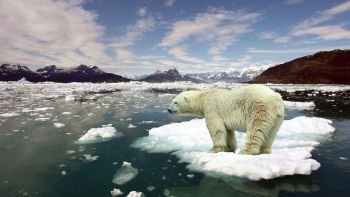

Green house Effect and Global warming
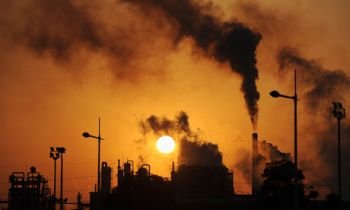
How Do We Know Where the Greenhouse Gases Come From?
Human Fingerprints versus Nature’s Pawprints
There is no question that carbon dioxide is a natural part of the atmosphere. In the past, nature has pumped a lot of carbon dioxide into the atmosphere during the warm interglacial periods between the frozen depths of the ice ages. Volcanoes may have released this carbon dioxide, or as some scientists have suggested, it may have been released from the oceans as they warmed up from other causes (such as changes in the earth’s orbit). How do we know where the carbon dioxide is coming from?
One tool that climatologists use is isotopes. Fossil fuels are literally fossil remnants of organic material left in the ground during the Carboniferous Period between 360 and 286 million years ago. Fossil fuels, having been around for so long, are depleted of any traces of carbon-14, which has a half-life of 5730 years. After 10 or more half-lives, or 57,300 years, the small amount of naturally occurring carbon-14 would have decayed to an insignificant amount. By comparing the amount of carbon-14 in carbon dioxide in the air, scientists are able to recognize the tell tale signature of fossil fuels as the source of these emissions. This result is confirmed by carefully keeping track of how much fossil fuel has been combusted and how much land has been cleared and relating this to the amount of carbon dioxide that is stored in the various sinks, such as the oceans, forests, and soils. The 500 billion tons of carbon dioxide that were released into the atmosphere during the industrial period would have been enough to raise the level in the atmosphere to 500 ppm. Currently, the carbon dioxide level is roughly 380 ppm because some of the excess carbon dioxide has been absorbed. This carbon dioxide level is consistent with the amount known to have been added.
Combustion of carbon-containing fuels consumes oxygen. Another method used to identify the source of the carbon dioxide level is to measure the oxygen level in the atmosphere. Scientists are able to detect a decrease in the percentage of oxygen in the atmosphere consistent with the amount needed to burn the fossil fuels. If ocean warming were responsible for the increase in atmospheric carbon dioxide, there would have been an increase rather than a decrease in the oxygen level in the atmosphere.
More carbon dioxide is released into the atmosphere in the northern hemisphere than in the southern hemisphere. Data comparing the difference between readings in the northern and southern hemispheres and serve as further proof that the increased carbon dioxide levels in the air are the result of people.
The more carbon dioxide is pumped into the atmosphere, the bigger is the difference. How is this possible? The reason is that more carbon dioxide is coming from the northern hemisphere because that is where the earth is most industrialized and that is where most of the fossil fuels are being burned.
ABILITY TO ABSORB SUNLIGHT
We have seen that there is a natural greenhouse effect that keeps the earth’s temperature in balance and without which the earth would be a lifeless ball of ice.
Without the natural greenhouse effect, the earth would be at a far less habitable temperature of around –19ºC (–2ºF). Some molecules absorb energy more readily than others. Carbon dioxide is not the strongest absorber, but because it is present in such large quantities, it dominates the rest. Methane and nitrous oxide absorb energy more effectively, whereas the fluorine-bearing compounds are “energy sponges.” Fortunately, for now, they are present in the atmosphere at only trace levels, but their potential to contribute to global warming is enormous.
RESIDENCE TIMES-HOW LONG THE GREENHOUSE GASES LAST
The long-term impact of greenhouse gases depends on, among other things, how long they persist in the atmosphere. Methane is attacked by other chemicals in the air and is removed fairly quickly. The CFCs are very stable and are likely to be in the atmosphere for the long haul. Unlike other greenhouse gases, carbon dioxide does not break down to any great extent in the atmosphere. Rather, it is removed from the atmosphere by the natural carbon cycle. A roughly 100-year time span is assigned to carbon dioxide so that it can be compared with other greenhouse gases.
GLOBAL WARMING POTENTIAL
The global warming potential (GWP) of each gas gives an indication of how effective a given amount of that gas is in contributing to global warming. This combines the ability of the gas to absorb infrared radiation with how long it survives in the atmosphere. A gas that absorbs very strongly but for a short time may have less of an impact than a gas that absorbs weakly but has a longer lifetime.
All global warming potentials are compared with carbon dioxide, which is defined to have a GWP of 1 throughout its residence time in the atmosphere. GWPs typical of the various groups of gases in the atmosphere. As a greenhouse gas is removed from the atmosphere, its impact decreases. For this reason, the GWP depends on whether we are talking about it impact after 20, 100, or 500 years.
The greenhouse gas components methane and nitrous oxide have higher GWPs than carbon dioxide. However, because they are present in lower concentrations than carbon dioxide in the atmosphere, they will have a smaller overall contribution to global warming. The last three listings in the table are fluorine-containing compounds. Although currently present in the atmosphere at very low concentrations, they can be very dangerous because of their extremely long lifetimes and ability to contribute to global warming for many years.
Greenhouse gases containing chlorine and fluorine are present at low levels in the atmosphere and are currently playing a relatively minor role in effecting global temperatures. However, like an unwanted house guest, they tend to stay around for a long time and absorb heat as if they were energy sponges. If allowed to build up in the atmosphere, these gases could become a far more serious threat.
OVERALL IMPACT-RADIATIVE FORCING
Scientists have developed a way to compare the various factors affecting the earth’s temperature based on the idea of radiative forcing. We know that the sun delivers solar power at a rate of 1370 W for every square meter of surface. The total impact of human activities adds 1.6 W/m2 to this value. A positive forcing tends to make the earth warmer.
A negative forcing offsets the positive factors and contributes a cooling effect. According to the Intergovernmental Panel on Climate Change (IPCC), the largest single contributor is carbon dioxide added to the atmosphere by human activities such as driving cars or using coal to produce electricity. Carbon dioxide represents half the impact of all the greenhouse gases. The other greenhouse gases (i.e., methane, nitrous oxide, and the various chlorinated halocarbons), which are present in much lower concentrations but which absorb infrared light very strongly, contribute about an additional third. Ozone plays a mixed role. In the troposphere, ozone causes warming. High in the stratosphere, however, ozone absorbs incoming light before it has a chance to warm the atmosphere.
Global dimming is alive and well. Particles in the air and clouds enhanced by pollution reflect sunlight before it can enter the atmosphere. As a result of particles in the air that reflect sunlight back into space, the earth is a little cooler than it otherwise would have been.
Overall, the combined effects of forcing influences result in a net increase in atmospheric temperature.
RADIATIVE FORCING-LIKE A DIMMER SWITCH FOR INCOMING SOLAR ENERGY
The term radiative forcing describes itself very well. Radiative refers to its effect on the overall energy being received from solar radiation. Forcing implies how a particular influence affects climate. A good way to think of radiative forcing is that each forcing effectively either turns the sun up a little brighter or (in the case of negative effects) turns it down to make it dimmer. The greenhouse gas components methane and nitrous oxide have higher global warming potential than carbon dioxide. However, because they are present in lower concentrations than carbon dioxide in the atmosphere, they have a lower radiative forcing.
Where the Human-Added Greenhouse Gases Come From
Topping the list is carbon dioxide from fossil fuel use, comprising 57 percent of all greenhouse gases. This percentage becomes much higher as countries become industrialized. Just over 19 percent of the greenhouse gases is carbon dioxide contributed by decay, following forest clearing, forest and brush fires, and other activities related to land use. All told, carbon dioxide accounts for nearly 80 percent of the greenhouse gases added to the earth’s atmosphere.
Methane, nitrous oxide, and halocarbons make up the balance.
WHAT WE DO THAT PUTS GREENHOUSE GASES INTO THE ATMOSPHERE
Providing energy to the world produces the largest amount of greenhouse gas emissions. This consists of nearly 26 percent of the total. Running industry around the world is next, adding 19.4 percent. Other human activities, such as forestry (17.4 percent), agriculture (13.5 percent), transportation (13.1 percent), heating or cooling buildings (7.9 percent), and landfills (2.8 percent), also contribute their share.
The mix for the more industrialized countries will have greater proportions from the energy and transportation areas than the world as a whole. The two largest contributors of greenhouse gases are burning coal to produce electricity and burning petroleum products to move vehicles.