VIDEO
Chemtrail Persistance”, Humidity, Condensation, Global Warming and Albedo
Altitude and Albedo
Altitude affects the climate of a region as air temperature decreases with height above sea level. For example, the high reaches of Mt. Kilimanjaro, Tanzania, at the equator, support glaciers even though the surrounding countryside down below is swelteringly hot.
Common Surfaces and Their Albedo
Surface – Albedo (%)
Earth average – 30
Moon average – 7
Fresh snow – 90
Antarctica – 80
Clouds – 0 to high 70s (jet contrails)
Desert – 25
Beach – 25
Grassy field – 20
Farmland – 15
Deciduous forest -13
City, tropical region – 12
Swampland – 9 to 14
Pine forest in winter, 45°N* – 9
City, northern region – 7
Bare dirt – 5 to 40, depending on color
Ocean – 3.5
*Lowest albedo in a natural land environment due to color of trees and scattering of sunlight by trees.
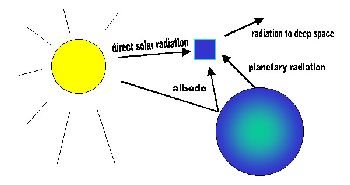
Albedo affects climate locally and globally. A location with high albedo, such as a glacier, reflects most of its incoming solar radiation and so remains cool. If the ice melts, the swamp that replaces it will have much lower albedo, and the ground will absorb heat. In that latter scenario, the warm swamp warms the air above it, which may alter atmospheric circulation and affect global climate.