
Environment and economics
‘Alternative’ ways of viewing the world: ecological theories
A range of ‘alternative’ ecological theories fundamentally question the prevalence or hegemony of science in shaping environmental law, as well as many of the cultural assumptions which underpin it.
Whilst the following discussion may appear to be largely theoretical in nature, it should also allow us to evaluate the prospects for greater approximation between environmental legislation and aspects of ecological thinking, and to consider the source of diverse ‘voices’ whose engagement in environmental decision making is increasingly sought, particularly those of women. A practical side also exists in that current ‘environmental’ debates, such as those over hunting, are clearly informed by ecological ideas about ‘closeness to nature’, as well as by animal rights arguments.
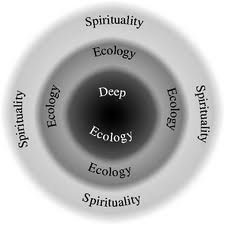
At the core of various branches of ecological thinking is the desire to eclipse the apparent divide between humans and nature and to encourage a sense of the ‘common’, to create a ‘new enlightenment of ecological consciousness’ or, in environmental terms, a holistic approach to environmental problems. Radical ecological thinking is broadly divided between two camps – deep and social ecology – both of which have been critiqued by a third approach to ecologism – ecofeminism. Gaia theory offers a further view.
Deep ecology
‘Deep ecology’ was a term first used by Arne Naess in 1973 (61) to describe the fundamental philosophical (‘deep’) questions about how humans relate to the environment. Adopting a holistic outlook, he considered that humans are intricately part of a ‘web of life’. He described a direct relationship between the individual and nature, unmediated by society, and a correspondingly direct responsibility of citizens for the ecological state of the earth. Such ideas originated in Aldo Leopold’s important work A Sand County Almanac (1968) which, adopting a naïve and direct style, proposed extending rights enjoyed by man to nature: ‘a biotic right to continued existence of animals, plants, waters, and soils, whatever their use to man’.62 Leopold’s system of values focussed upon the concept of community: ‘the land ethic simply enlarges the boundaries of the community to include soils, waters, plants, and animals, or collectively: the land’.63He then envisages humans absorbed into such a ‘community with the land’.
Aldo Leopold, A Sand County Almanac (Ballantine Books, 1968), pp. 253, 261–2
Land, then, is not merely soil; it is a fountain of energy flowing through a circuit of soils, plants, and animals. Food chains are the living channels which conduct energy upward; death and decay return it to the soil. The circuit is not closed; some energy is dissipated in decay, some is added by absorption from the air, some is stored in soils, peats, and long-lived forests; but it is a sustained circuit, like a slowly augmented revolving fund of life. There is always a net loss by downhill wash, but this is normally small and offset by the decay of rocks. It is deposited in the ocean and, in the course of geological time, raised to form new lands and new pyramids.
…
It is inconceivable to me that an ethical relation to land can exist without love, respect, and admiration for land, and a high regard for its value. By value, I of course mean something far broader than mere economic value; I mean value in the philosophical sense.
Perhaps the most serious obstacle impeding the evolution of a land ethic is the fact that our educational and economic system is headed away from, rather than toward, an intense consciousness of land. Your true modern is separated from the land by many middlemen, and by innumerable physical gadgets. He has no vital relation to it; to him it is the space between cities on which crops grow. Turn him loose for a day on the land, and if the spot does not happen to have a golf links or a ‘scenic’ area, he is bored stiff. If crops could be raised by hydroponics instead of farming, it would suit him very well. Synthetic substitutes for wood, leather, wool, and other natural land products suit him better than the originals.
In short, land is something he has ‘outgrown’.
…
The ‘key-log’ which must be moved to release the evolutionary process for an ethic is simply this: quit thinking about decent land use as solely an economic problem. Examine each question in terms of what is ethically and esthetically right, as well as what is economically expedient. A thing is right when it tends to preserve the integrity, stability and beauty of the biotic community. It is wrong when it tends otherwise. Deep ecology therefore offers a prescription for living in nature, rather than apart from it. Central to this change in the way humans live their life is a process of spiritual self-realization, as a means to profound identification with nature as the fulfillment of life. This is the idea that through transcendental reflection or meditation (with or in nature) it is possible to bridge the gap, and recognize the indivisibility of humans and nature. Naess explains: ‘The ecosophical outlook is therefore developed through an identification so deep that one’s own self is no longer properly delimited by the personal ego or the organism. One experiences oneself to be genuinely part of all life.’64 For Naess, ‘a human being is not a thing in an environment, but a juncture in a relational system without determined boundaries in time and space’.65
To give practical expression to the philosophy of deep ecology, fundamental principles have been formulated by, amongst others, Bill Devall and George Sessions. They consider that the most important principles are that: the wellbeing and flourishing of human and non-human life on Earth have value in themselves, independent of the usefulness of the non-human world for human purposes; the richness and diversity of life forms contributes to the realization of these values and are also values in themselves; and humans do not have a right to reduce this richness and diversity ‘except to satisfy vital needs’.66 This adds up to a life of ‘voluntary simplicity’ – ‘simple in means, rich in ends’ – in communities arranged according to bioregions, using the minimum of resources and employing recycling, reuse and renewable energy, and, more controversially, restraining population growth.
Critiques of the deep ecology movement focus on its favoring of the status quo, since, whilst making ‘gestures towards communities of resistance and communitarian forms of practical organization as an element of its strategy for defining entirely new ecological practices’, 67 deep ecology is not (unlike social ecology, discussed below) aimed at the disruption or reform of social and political structures and practices. Perhaps most trenchant criticism comes from feminists who question the centrality of the Self (or autology, the process of self-realization) as ultimately inward-looking. As Val Plumwood tightly notes: ‘It is ironic that a position claiming to be anti-anthropocentric should thus aim to reduce questions of the care and significance of nature to questions of the realization of the human self (or Self).’68 The process of self-realization is also culturally specific – the process of ‘losing oneself in wilderness’ tending to be described by North American ecologists (the ‘mountain-men’). Most seriously, for Plumwood, deep ecology denies ‘difference’ and continues to conceive of nature in ways which reflect male domination, thus providing its own version of the rationalist account of self and species. She concludes that in many crucial respects, deep ecology does not present a very thoroughgoing alternative to extensions of mainstream ethics.
Val Plumwood, Feminism and the Mastery of Nature (Routledge, 1993), p. 10
Although deep ecology contrasts with the mainstream in emphasising connections with the self and the continuity between humans and nature, there remain severe tensions between some forms of deep ecology and feminist perspectives. These forms have not satisfactorily identified the key elements in the traditional framework, or noted their connections with rationalism and the master identity. As a result they fail to reject adequately rationalist accounts of self, universalisation and the discarding of particular connections.
The analysis of human/nature and other dualisms … has stressed the importance of affirming both difference and continuity, and of maintaining the balance between them. Respect for others involves acknowledging their distinctiveness and difference, and not trying to reduce or assimilate them to the human sphere. We need to acknowledge difference as well as continuity to overcome dualism and to establish non-instrumentalising relationships with nature, where both connection and otherness are the basis of interaction. The failure to affirm difference is characteristic of the colonizing self which denies the other through the attempt to incorporate it into the empire of the self, and which is unable to experience sameness without erasing difference.
61. Arne Naess, ‘The Shallow and the Deep, Long Range Ecology Movement: A Summary’ (1973) Inquiry 16.
62. Aldo Leopold, A Sand County Almanac (Ballantine Books, 1968), p. 239.
63. Ibid.
64. Arne Naess, ‘Self-realisation: An Ecological Approach to Being in the World’ (1987) 4 Trumpeteer, pp. 39–40.
65. Arne Naess, Ecology, Community and Lifestyle (Cambridge University Press, 1989), p. 79.
66. Bill Devall and George Sessions, Deep Ecology: Living As if the Earth Mattered (Peregrine Smith, 1985).
67. Harvey, Justice, Nature, pp. 164–9.
68. Val Plumwood, Feminism and the Mastery of Nature (Routledge, 1993), p. 11.