
Climate change mitigation strategies have evolved significantly by the year 2026. While carbon dioxide remains the primary focus of long term climate policy due to its longevity in the atmosphere, methane has emerged as the most critical variable for immediate climate impact. Methane is a potent greenhouse gas with a global warming potential over eighty times greater than carbon dioxide over a twenty year period. Because methane persists in the atmosphere for only about a decade, reducing its emissions provides an immediate cooling effect that can slow the rate of global temperature rise. As of 2026, nations and industries have moved beyond simple goal setting toward the implementation of aggressive technological and operational strategies across the three primary sectors responsible for human caused methane emissions, specifically the energy, agriculture, and waste management industries. This transition represents a sophisticated approach to atmospheric chemistry that prioritizes rapid climate wins while long term decarbonization efforts continue.
Energy Sector Innovations
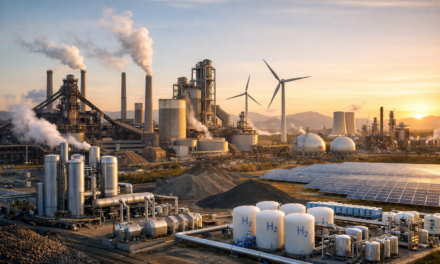
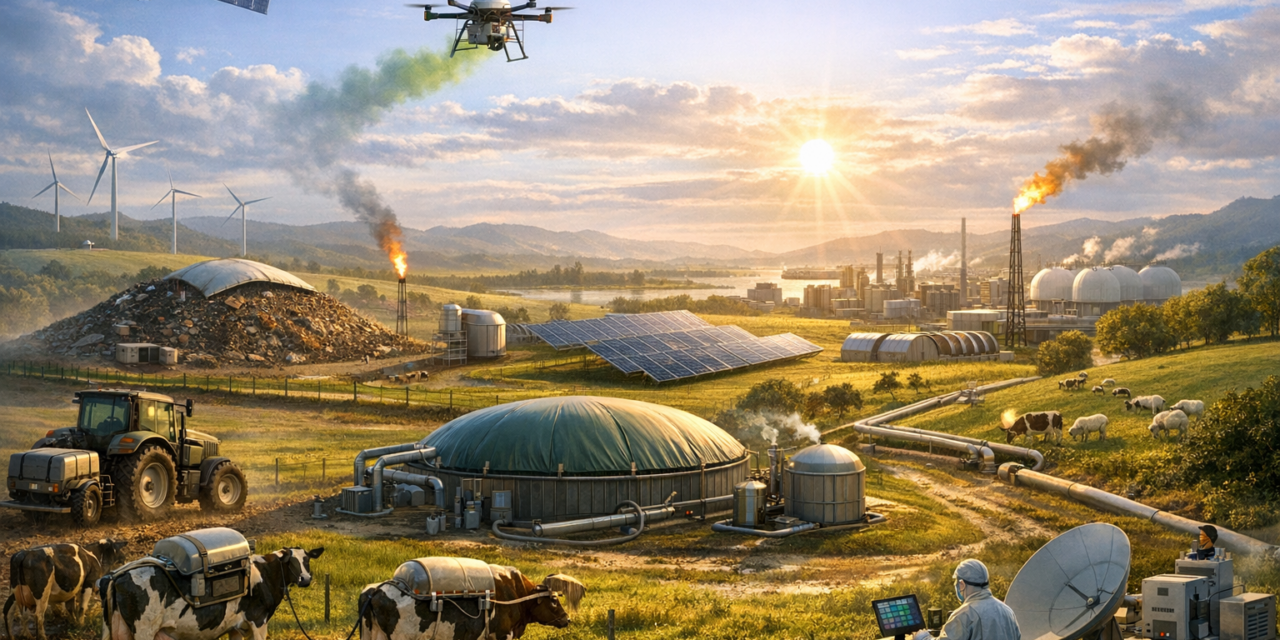
The energy sector has long been the most significant contributor to anthropogenic methane emissions through the extraction, processing, and transportation of fossil fuels. By 2026, the global approach to energy sector methane has shifted from voluntary reporting to mandatory satellite monitored compliance. A core strategy now involves the widespread deployment of advanced leak detection and repair programs. High resolution satellite constellations launched in the mid twenties now provide near real time data on point source leaks from pipelines and storage facilities. This constant surveillance has forced companies to adopt automated shut off valves and vapor recovery units that capture methane before it enters the atmosphere.
Another major advancement in 2026 is the electrification of oil and gas infrastructure. Historically, many remote drilling sites relied on gas driven pneumatic controllers that constantly bled methane as part of their operational design. The transition to instrument air or electric pneumatic systems has virtually eliminated these intentional emissions. Furthermore, the industry has increased its focus on flaring reduction. While flaring converts methane into carbon dioxide, it is often performed inefficiently, leading to substantial uncombusted methane release. Modern regulations now demand high efficiency enclosed combustion units that ensure nearly all gas is oxidized. These technological shifts are complemented by economic policy as many countries have instituted methane taxes that make the cost of wasted gas higher than the cost of capturing it, turning a waste product into a valuable commodity.
Agricultural Transformations
Agriculture represents a complex challenge because it involves biological processes rather than industrial leaks. In 2026, the strategy for agricultural methane reduction is multifaceted, focusing on livestock management, rice cultivation, and waste handling. Livestock, particularly cattle, produce methane through enteric fermentation. Scientists and farmers have implemented dietary supplements that alter the digestive bacteria in ruminants to produce less methane. Compounds such as seaweed based additives and synthetic inhibitors have moved from experimental laboratory settings to widespread commercial use in large scale dairy and beef operations. These supplements represent a major breakthrough in biological climate intervention because they address the root cause of the emission without requiring a reduction in global meat and dairy production.
Rice cultivation, which accounts for a significant portion of agricultural methane, has seen a shift toward intermittent flooding practices. Traditionally, rice paddies were kept submerged to suppress weeds, creating anaerobic conditions where methanogenic bacteria thrive. By implementing alternate wetting and drying regimes, farmers can oxygenate the soil periodically, which drastically reduces the ability of these bacteria to produce methane. By 2026, agricultural extension services globally are providing the sensor technology necessary for farmers to monitor soil water levels effectively. This practice not only saves water but also increases the efficiency of fertilizer use, providing a strong economic incentive for farmers to adopt climate friendly practices.
Waste Management Advancements
The waste sector has transitioned from viewing landfills as stagnant disposal sites to treating them as active biogas recovery hubs. In 2026, the global waste management strategy is centered on circular economy principles that prioritize organic waste diversion. Many metropolitan areas have implemented strict regulations that prevent food waste and green matter from entering traditional landfills. This organic material is instead sent to industrial composting facilities or anaerobic digesters. In these digesters, the methane produced by decomposing organic matter is captured in a controlled environment and converted into renewable natural gas or electricity.
For existing landfills that cannot be fully bypassed, the technology for methane capture has seen immense improvements. Modern landfill covers now utilize biofiltration layers. These layers are engineered with specific soil compositions and methanotrophic bacteria that consume methane as it rises through the waste pile, converting it into carbon dioxide and water before it can escape into the atmosphere. This biofiltration technique is relatively inexpensive and highly effective for smaller or older landfills that lack the infrastructure for industrial gas collection systems. Furthermore, the widespread adoption of real time monitoring systems at landfills allows operators to identify surface emissions immediately. By utilizing drones equipped with specialized sensors, facility managers can patch localized leaks in the landfill cap, ensuring the integrity of their gas collection systems. These strategies collectively represent a transition toward a waste management culture that treats methane as a lost resource rather than a nuisance.
Policy and Technological Integration
The effectiveness of these sectoral strategies in 2026 is largely supported by the integration of global climate data frameworks. Governments have established international agreements that mandate the reporting of methane intensity metrics across all energy and agriculture supply chains. This transparency creates a level playing field where companies and nations are held accountable for their methane footprints. The availability of open source data maps has empowered investors and consumers to demand higher standards, creating a market environment where low methane intensity products receive a premium price.
Technology has also played a bridging role between these sectors. For instance, the renewable natural gas produced at waste facilities and agricultural digesters is now being injected into the same pipelines used by the oil and gas industry. This integration creates a synergistic effect where the reduction of methane from one sector provides the fuel for another, decarbonizing the energy grid while simultaneously managing waste. The development of standardized certification processes for this gas has allowed for efficient trading and incentivized private sector investment into methane abatement technologies. These policies ensure that the financial burden of reduction is distributed across the entire economic lifecycle of methane producing products.
Addressing Barriers to Implementation
Despite the successes seen by 2026, several barriers to universal methane reduction remain. The primary challenge is the capital cost of retrofitting existing industrial equipment in developing economies. To combat this, international climate finance mechanisms have evolved to prioritize methane abatement projects. Grants and low interest loans are specifically earmarked for infrastructure upgrades that provide the highest return on emissions reduction. This support is crucial because it allows developing nations to leapfrog older, leak prone technologies and move directly toward cleaner, monitored systems.
Another challenge is the cultural shift required in agricultural practices. Many traditional farming methods are deeply embedded in regional cultures and economic systems. Addressing this requires a bottom up approach where success stories from early adopters are showcased to encourage widespread change. Agricultural cooperatives have been instrumental in this process by pooling resources to purchase expensive sensors and dietary supplements. Education remains the strongest tool for overcoming resistance to change. By demonstrating that methane reduction leads to better soil health, improved crop yields, and higher water efficiency, the agricultural sector has found that environmental stewardship is often synonymous with long term financial profitability.
Conclusion
As we reflect on the state of methane reduction in 2026, it is clear that significant progress has been made. The transition from general awareness to precise, data driven action has transformed how humanity handles methane across the energy, agricultural, and waste sectors. By leveraging advanced satellite surveillance, biological supplements for livestock, and circular waste management practices, the global community has begun to curb the most dangerous drivers of near term temperature change. These strategies demonstrate that the challenge of methane is not just an environmental burden, but an opportunity to modernize infrastructure, improve agricultural efficiency, and reduce systemic waste.
The success of these initiatives relies on the continued collaboration between governments, the private sector, and local communities. While the path ahead still requires diligent investment and policy enforcement, the foundation built over the last few years provides a robust framework for future success. The ability to lower atmospheric methane concentrations holds the promise of significant climate stability in the coming decades, providing a necessary breathing room as the global economy transitions away from carbon intensive fuels. By maintaining the current momentum and continuing to refine the technologies used to capture and manage methane, the world is moving toward a more sustainable and balanced future. The progress documented in 2026 serves as a testament to the fact that when industrial, biological, and policy innovations align, the most pressing environmental challenges can be met with practical and scalable solutions. As humanity continues to move forward, the lessons learned from these strategies will be essential in shaping long term climate goals and ensuring a stable environment for future generations. The focus on methane is not merely a tactical maneuver in a broader climate strategy, but a fundamental shift in how we manage our footprint on the planet, ensuring that we remain responsible stewards of the atmosphere and its delicate balance. Through persistent effort and global cooperation, the world is making great strides in securing a cooler and more resilient climate for all.
Bibliography
- IPCC – Intergovernmental Panel on Climate Change. Sixth Assessment Report: Mitigation of Climate Change. Geneva: IPCC, 2022.
- IEA – International Energy Agency. Methane Tracker 2026. Paris: IEA, 2026.
- UNEP – United Nations Environment Programme. Global Methane Assessment: 2030 Baseline and Mitigation Potential. Nairobi: UNEP, 2024.
- FAO – Food and Agriculture Organization of the United Nations. Livestock Methane Mitigation Strategies: Global Review 2025. Rome: FAO, 2025.
- World Bank. Financing Methane Abatement in Developing Economies. Washington, DC: World Bank Publications, 2025.
- Global Methane Initiative. Best Practices for Methane Reduction in the Waste Sector. Washington, DC: GMI, 2025.
- European Environment Agency. Methane Emissions in Europe: Policy Integration and Technological Innovation. Copenhagen: EEA, 2025.
References:
https://www.nature.com/articles/s41558-024-01947-x
https://www.frontiersin.org/journals/sustainable-cities/articles/10.3389/frsc.2024.1432995/full
https://www.nationalacademies.org/publications/27157
https://pmc.ncbi.nlm.nih.gov/articles/PMC11545165/
https://www.scirp.org/journal/paperinformation?paperid=145201
https://www.tandfonline.com/doi/full/10.1080/10962247.2018.1515123
https://www.mdpi.com/2674-0389/5/1/7
https://www.frontiersin.org/journals/sustainable-cities/articles/10.3389/frsc.2024.1432995/full
https://www.nature.com/articles/s41558-024-01947-x
https://www.sciencedirect.com/science/article/pii/S2590332223001951
https://pmc.ncbi.nlm.nih.gov/articles/PMC12037817/
https://pmc.ncbi.nlm.nih.gov/articles/PMC8556609/
https://pubs.acs.org/doi/10.1021/acs.est.2c05446
https://pmc.ncbi.nlm.nih.gov/articles/PMC11545165/
https://iopscience.iop.org/article/10.1088/2634-4505/accf33/pdf
https://www.sciencedirect.com/science/article/pii/S0959378022001248