
VIDEO
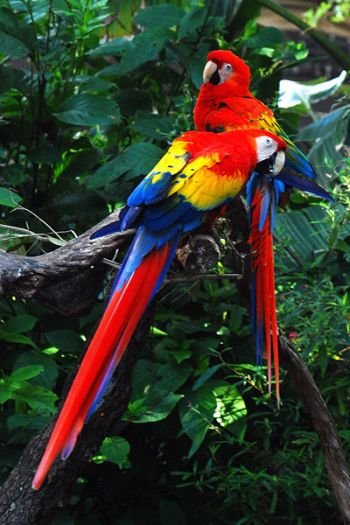
Amazon Rainforest – Iquitos Peru
Alaska National Interest Lands Conservation Act, 1980, US
An act which expanded the Alaska national parks system by 45 million acres’ (1 8 million ha), and wildlife refuges under the US Fish and Wildlife Service by 54 million acres (22 million ha); the US Forest Service also gained about 3 million acres (1.2 million ha).
Alaskan National Parks
A range of national parks, wildlife refuges and wilderness areas established since the initial creation of Denali National Park and Preserve in 1917. Denali is an area of mountain peaks on the northern flank of the Alaska Range. A special feature is Mount McKinley, the highest peak in North America. Denali was followed by the establishment of the Katmai National Park and Preserve in 1918 (including the Valley of Ten Thousand Smokes), Glacier Bay National Park and Preserve in 1925 and the Sitka National Historic Park.
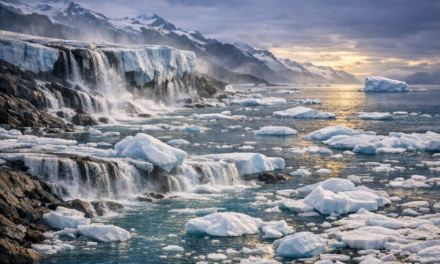
Among the notable features of Glacier Bay are great tidewater glaciers, a dramatic range of flora and an unusual variety of wildlife, including brown and black bears and mountain goats. The Tonga’s and Chugach national forests in the southeast and south-central regions, respectively, are also public land reserves. The national parks and wildlife sanctuary system was expanded by the US National Interest Land Conservation Act, 1980.
Amazonian Rain Forest
A massive tropical rain forest, occupying the drainage basin of the Amazon River and its tributaries covering an area of 7000000 sq km. It comprises 40 Dictionary of environmental law 7 per cent of Brazil’s total land area, bounded by the Guiana Highlands in the north, the Andes Mountains in the west, the Brazilian central plateau to the south, and the Atlantic Ocean to the east. The rain forest stretches from the swampy mangroves in the east near the Atlantic Ocean to the tree line of the Andes.
The Amazon Valley is rather like an immense canyon, opening into the Atlantic Ocean with a mouth more than 400 km wide. With 1000 tributaries, it is the largest basin area in the world. The Amazonian rain forest has a wide variety of trees including myrtle, acacia, rosewood, Brazil nut, rubber tree, mahogany, cedar and palm. Wildlife includes the jaguar, matee, tapir, red deer, capybara and several kinds of monkeys. The rich bird life of the forest includes parrots, toucans, haugnests, perdizes, cormorants and scarlet ibises. Fish include catfish, electric eels and piranhas.
The Amazon River is the greatest river in the world in its volume and the area of its drainage basin. The Amazon flows some 6400 km across northern Brazil to its mouth in the Atlantic Ocean. It has been estimated that from 20 to 25 per cent of all the water that runs off the surface of the Earth is carried by the Amazon. The average annual discharge is roughly ten times that of the Mississippi River and about four times that of the Congo River. Its length is second only to that of the Nile.
In 1978, a Treaty for Amazonian Cooperation was agreed by affected countries of the region to promote harmonious developments and permit equitable sharing of the benefits. Joint studies were to be promoted for the better use of the natural resources within the region. An Amazonian Cooperation Council was created, working under the ministers for Foreign Affairs. The date of entry for the treaty was 1980, with the endorsements of Bolivia, Brazil, Colombia, Ecuador, Guyana, Peru, Surinam and Venezuela.
See also: Brazil.