2013 National Emmy Award Nominee: Melting Point Greenland
Climate Consequences by Temperature
The IPCC’s Fourth Assessment (IPCC-4) report, from 2007, shows the responses that can be expected for various increases in temperature above 1990 levels:
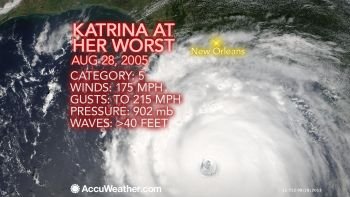
Up to 1.8°F (1°C): Some ecosystem shifts; most coral reefs bleached; some increases in global agricultural production potential, but reduced yields at lower latitudes; increases in severe storms
From 1.8 to 3.6°F (1 to 2°C): About one-quarter of species lost from current range; further increases in global agricultural production potential but further yield reduction at lower latitudes; coastal flooding; increased water stress in dry areas, with increased risk to human health; increased frequency and intensity of drought; increased heat waves
For 3.6 to 5.4°F (2 to 3°C): Most of tundra and about half of boreal forest area disappears; about one-third of species lost from current range; all coral reefs bleached; global agricultural production potential peaks, bringing hunger to populations in lower latitudes; 1 billion people become water stressed
For 5.4 to 7.2°F (3 to 4°C): Global decreases in agricultural production potential; large numbers additionally at risk of hunger; up to one-third of global population water stressed; widespread deglaciation and disintegration of West Antarctic Ice Sheet; further increased intensity and frequency of fire, drought, and storms
For 7.2 to 9.0°F (4 to 5°C): Decreases in agricultural production potential at higher latitudes, as well as further decreases at lower latitudes; too expensive to protect many areas from flooding; frequency of hot days much greater, many locations very difficult to live in; weakening and shut-down of some ocean currents, including Atlantic meridional overturning
For 9.0 to 10.8°F (5 to 6°C): Widespread species extinction.
Temperature Patterns
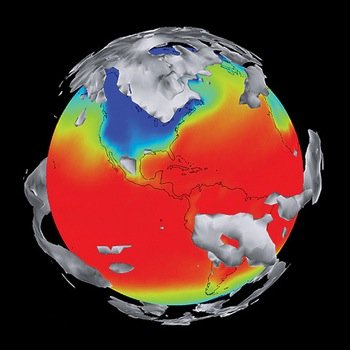
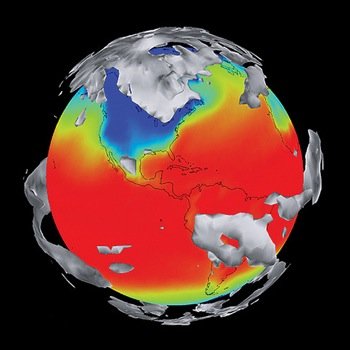
Temperatures will rise as atmospheric greenhouse gas levels increase, but temperature increases will lag behind greenhouse gas levels due to thermal inertia. Temperatures will not increase uniformly around the globe: Most lands will warm more than the oceans due to the thermal inertia of the seas; the Northern Hemisphere will warm more than the Southern because it is mostly land; and the polar regions will warm much more than the rest of the planet due to the transition of ice to liquid water.
Water Cycle
The water cycle will continue to intensify. Precipitation will decrease in drier areas, including in many mid-continental areas, and increase in wetter areas. Rainfall will decline in some locations in the summer, which harm crop yields, increase forest fires, and increase water will stress. Currently, about 1.7 billion people live in countries that are water stressed: By 2025, that number will likely grow to 5 billion. Droughts will become longer and fiercer, making many marginal regions difficult or impossible to inhabit, including the western United States, northern China, and southern Africa. Deserts will become drier, and the Asian monsoon will be enhanced but will likely become more variable.
Arctic
The Arctic will continue to melt. As ice is lost, animals such as polar bears and seals will become greatly reduced in number or will go extinct. Many scientists say that unless drastic changes are made, the Arctic as it has been for the past several centuries is doomed.
Oceans
The oceans will experience large temperature rises, and ocean life will move pole ward where possible. A dramatic impact will be seen in coral reefs, which may die out almost completely in the next 50 years. A temperature rise of 1.8°F (1°C) is predicted to lead to extensive irreversible coral bleaching, particularly in years when other ocean warming events such as El Niño are superimposed. Between 2030 and 2050, the world’s most magnificent coral reef, Australia’s Great Barrier Reef, will experience annual bleaching due to warmer temperatures and other stresses such as higher sea level. Losing coral reefs does not only mean losing a unique and beautiful ecosystem and the food sources it contains. Coral reefs are nurseries for many types of fish. If reefs die, commercial fisheries, many of which are already currently being overfished, may collapse.
Ocean acidification, the decrease in oceanic pH, will decrease the ability of organisms to make carbonate shells, and existing carbonate shells will dissolve. This effect will be seen first in the cooler waters of the Polar Regions because cold water absorbs more CO2 gas. Warmer waters will acidify later, and coral reefs will be affected. Dr. Richard Norris of Scripps Institution of Oceanography in California, who has worked on foram chemistry from the Paleocene-Eocene Thermal Maximum (PETM), calculates that the amount of carbon needed to create the effects seen on deep sea life in the PETM is 2,500 to 4,000 gigatons (Gt). Norris points out that, “The projected addition of fossil fuel CO2 in the next couple hundred years is about 5000 Gt, which is comfortably enough to completely acidify the ocean right up to the surface waters.”
Taking into account thermal inertia, thermal expansion, and glacial melting, the IPCC predicts a sea level rise of between 7 and 32 inches (18 and 81 cm) by the end of the century (by contrast, sea level rose between 6 and 9 inches [15 and 23 cm] in the twentieth century) and that the seas will rise for at least 1,000 years. Many coastal ecosystems are hemmed in by human development and will be unable to move inland. Human developments themselves will be lost as storms do their damage farther inland, atop higher seas. A report by the Heinz Center for Science, Economics, and the Environment in Washington, D.C., states that in the United States, rising seas will make at least 25% of the houses within 500 feet (150 m) of the coast (more than 350,000 total) uninhabitable by 2060. A one-foot (30-cm) sea level rise in Florida would cause the loss of 100 feet (30 m) of beaches. By 2080, rising seas could force hundreds of millions of people, particularly in nations without the resources to protect their coastlines, to abandon low-lying coastal areas.
Rising seas will force residents to step up engineering and beach replenishment projects. As this becomes more difficult and expensive, some coastal areas will be abandoned. As a preventative measure, coastal geologists recommend building farther inland from the coast.
Agriculture
Initially high temperatures and changing precipitation patterns may increase crop yields in mid to high latitudes and decrease them in low latitudes. But, eventually, hotter and drier conditions will decrease agricultural productivity in higher latitudes as well. Locations that become drier will rely more on irrigation. Countries that are already straining to supply enough water for their people and crops may not succeed. As a result, famine may become more common in places such as sub-Saharan Africa and, ultimately, many other regions. Warmer temperatures are predicted to increase the range of plant diseases and parasites.
Some models predict that CO2 doubling will lead to a 35% loss in agricultural regions of the United States and quadrupling will result in a 60% loss. The North American breadbasket will move from the Midwestern United States into Canada. Similar changes will occur all over the world, resulting in a total loss of current cropland of 10 to 50%, and a decline in the global yield of key food crops of between10% and 70%. Although climate may become suitable for agriculture at high latitudes, moving farms pole ward where there is now tundra is not a reasonable solution. Crops need good soil, which takes tens or hundreds of years to develop. Short-term adaptations to warmer temperatures, such as increased irrigation, could put off these problems for a time.