
Climate change, driven primarily by anthropogenic greenhouse gas emissions, is no longer a distant threat but a present reality reshaping the fundamental systems that sustain human civilization. Among the most immediate and pervasive impacts of this global shift is the profound alteration of the planet’s hydrological cycle, directly affecting global water resources. By the year 2026, these effects, already clearly discernible, will have intensified, presenting critical challenges to water security, agriculture, energy production, and public health worldwide. Understanding these ten primary effects allows for a more accurate assessment of the urgency required for adaptation and mitigation strategies. These effects span from changes in precipitation patterns and glacier melt to increased water pollution and geopolitical stress over shared water sources. The complexity lies in the interconnectedness of these impacts, where one change cascades into several others, creating compounded vulnerabilities, particularly in already water-stressed regions. The global water system, characterized by finite renewable resources, is proving increasingly susceptible to the rapid environmental fluctuations induced by rising global temperatures.
- Intensified Drought Frequency and Severity
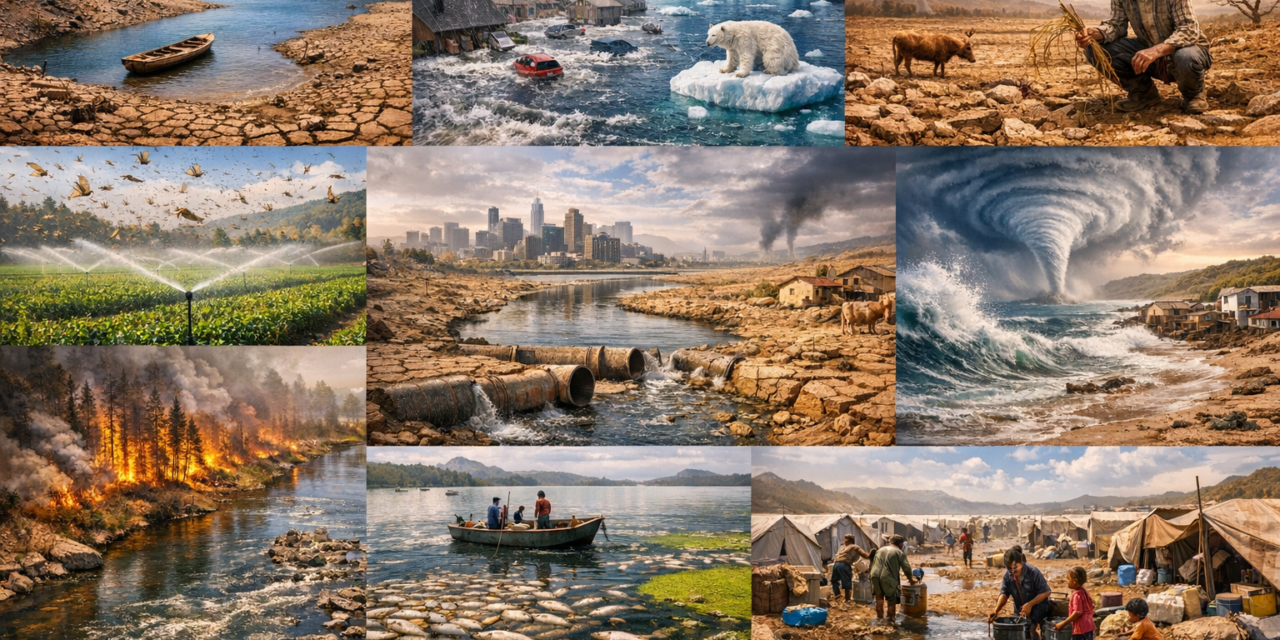
One of the most apparent effects accelerating towards 2026 is the marked increase in the frequency, duration, and severity of meteorological and hydrological droughts. Rising global temperatures accelerate evaporation from soil, reservoirs, and surface water bodies, effectively drying out landscapes faster than historical norms. In regions like the American Southwest, the Mediterranean basin, and parts of Sub-Saharan Africa, this effect manifests as persistent low flows in major river systems and the depletion of groundwater reserves. By 2026, communities relying on rain-fed agriculture or single surface water sources will face prolonged periods without adequate replenishment. For instance, major agricultural areas dependent on seasonal monsoon rains may experience delayed onset or erratic distribution, leading to crop failures that ripple through local and global food markets. This sustained water deficit forces governments to enact severe water use restrictions, often pitting agricultural needs against municipal and industrial demands, escalating internal conflicts over dwindling supplies.
- Changes in Precipitation Patterns and Extremes
Climate change does not simply reduce water everywhere; it radically alters how and where water falls. In 2026, the world will experience a paradoxical situation: wetter wet seasons and drier dry seasons. Warmer air holds more moisture, meaning that when precipitation does occur, it often comes in the form of intense, short-duration downpours. This shift results in increased flash flooding, overwhelming existing drainage infrastructure and causing immediate damage. Simultaneously, the periods between these extreme rainfall events become longer, exacerbating dry spells. Regions historically reliant on moderate, consistent rainfall, such as parts of Southeast Asia, are seeing monsoon seasons characterized by destructive peaks followed by extended lulls, making water management exceedingly difficult as storage capacity cannot handle the sudden influx nor sustain the prolonged absence.
- Accelerated Glacier and Snowpack Loss
Glaciers and seasonal snowpacks act as crucial natural water towers, storing water during cold periods and slowly releasing it during warmer months, providing essential meltwater flow during dry seasons. By 2026, the accelerated melting rate of these cryospheric features will have significantly reduced their storage capacity. In the Himalayas, the Andes, and the Alps, glacial retreat is already threatening the long-term water security of billions downstream. The immediate effect is initially increased river flow, potentially causing localized flooding, but the long-term consequence is catastrophic. As these reservoirs disappear, downstream communities dependent on this reliable summer melt for irrigation and municipal supply, such as those along the Indus or Ganges rivers, will face severe water shortages as the natural buffer disappears entirely.
- Rising Sea Levels and Saltwater Intrusion
The thermal expansion of ocean water and melting ice sheets contribute to rising sea levels, a process that directly jeopardizes freshwater resources near coastlines. In 2026, saltwater intrusion into coastal aquifers will become a more acute problem globally. Coastal aquifers, which supply major metropolitan areas and agricultural lands in regions like Vietnam’s Mekong Delta or low-lying islands, are highly vulnerable. As the sea level pushes inland, saline water contaminates freshwater lenses, rendering wells unusable without costly desalination interventions. This forces communities further inland to seek new, often deeper or more distant, freshwater sources, adding strain to inland resources already under pressure from other climate effects.
- Increased Water Temperature and Eutrophication
Higher ambient air and water temperatures directly impact the physical and chemical quality of surface water bodies. Warmer lake and river waters hold less dissolved oxygen, stressing aquatic ecosystems and reducing biodiversity. Furthermore, elevated temperatures accelerate the rate of biological and chemical reactions, promoting the growth of harmful algal blooms (HABs), a phenomenon known as eutrophication. By 2026, outbreaks of toxic blue-green algae in freshwater reservoirs used for drinking water will be more common. Treating water contaminated by these blooms is expensive and time-consuming, potentially leading to temporary restrictions on drinking water supply in affected municipalities, as seen in recent incidents in parts of the Great Lakes region.
- Depletion of Non-Renewable Groundwater Reserves
As surface water becomes less reliable due to drought and unpredictable rainfall, reliance on groundwater deep within aquifers increases dramatically. In 2026, this over-extraction will be evident globally, particularly in areas with intensive agriculture, such as India’s North China Plain or the Ogallala Aquifer region in the US. Since groundwater recharges very slowly, the current extraction rates are unsustainable, leading to falling water tables. This depletion forces farmers to drill deeper, more expensive wells, increasing energy consumption for pumping, and in some subsided areas, causing irreversible land subsidence, permanently damaging the aquifer structure.
- Increased Water Scarcity and Geopolitical Tensions
Water scarcity, defined as the lack of sufficient water resources to meet a region’s demands, will intensify in specific transboundary river basins by 2026. When climate change reduces the flow of shared rivers, upstream nations may prioritize their own needs, leading to conflicts or disputes with downstream neighbors who rely on those flows for sustenance. The Nile Basin, the Mekong River system, and the Jordan River basin serve as key examples where climate-induced water stress is overlaid upon existing political fragilities, increasing the risk of diplomatic breakdowns or regional instability as nations fiercely guard their shrinking water portfolios.
- Infrastructure Stress from Extreme Weather
The physical infrastructure designed to manage water-dams, levees, pipelines, and treatment plants-was built based on historical climate data that is now obsolete. In 2026, the increased intensity of floods and storms will place unprecedented physical stress on this aging infrastructure. Major flood events can damage or destroy treatment facilities, contaminate water supplies through sewage overflow, and wash out rural water conveyance systems. Conversely, prolonged droughts can lead to lower reservoir levels, inhibiting hydropower generation and limiting the ability of dams to manage flood peaks downstream, creating a cycle of vulnerability on both ends of the hydrological spectrum.
- Changes in Water Quality from Runoff and Erosion
Intense rainfall events drive higher rates of soil erosion in unprotected or degraded agricultural lands. This runoff carries excessive sediments, nutrients (like nitrogen and phosphorus from fertilizers), and pollutants directly into rivers and reservoirs. By 2026, this increased sediment load will reduce the operational lifespan of reservoirs by accelerating siltation, decreasing storage capacity. Moreover, the influx of nutrients exacerbates algal blooms (Effect 5), and increased particulate matter necessitates more intensive and costly filtration and purification processes for municipal drinking water supplies, directly impacting public health safeguards.
- Impacts on Energy Production Reliability
Water resources are intrinsically linked to energy security, particularly through hydropower generation and thermoelectric cooling. In 2026, regions heavily reliant on hydropower, such as Brazil or parts of China, will face diminished capacity during prolonged dry seasons, forcing them to rely more heavily on fossil fuels, potentially undermining climate mitigation goals. Simultaneously, thermoelectric power plants (coal, nuclear) require massive amounts of water for cooling. Reduced river flows or elevated water temperatures during heatwaves force these plants to operate at reduced capacity or even shut down temporarily to avoid environmental damage or self-destruction, creating electricity shortages concurrent with water shortages.
Conclusion
The ten effects described demonstrate a systemic breakdown in the stability of global water resources projected for 2026. These impacts-ranging from altered precipitation dynamics and cryospheric loss to infrastructure failure and geopolitical tension-are not isolated incidents but interconnected symptoms of a changing climate. The convergence of intensified drought, saltwater intrusion, and escalating water quality crises demands immediate, integrated management responses. Addressing these challenges by 2026 requires significant investment in climate-resilient water infrastructure, the adoption of sustainable agricultural practices that conserve groundwater, and robust international frameworks for managing transboundary water resources. Failure to acknowledge the reality and urgency of these ten compounding effects will severely undermine global stability and human development in the coming years.
Bibliography
- United Nations World Water Assessment Programme. The United Nations World Water Development Report. UNESCO Publishing.
- IPCC. Sixth Assessment Report: Impacts, Adaptation and Vulnerability. Intergovernmental Panel on Climate Change.
- World Bank. High and Dry: Climate Change, Water, and the Economy. World Bank Group.
- UN Water. Global Analysis and Assessment of Sanitation and Drinking-Water (GLAAS) Report.
- International Water Management Institute (IWMI). Water Scarcity and Climate Change: Global Challenges and Policy Responses.
- OECD. Water Security for Better Lives. Organisation for Economic Co‑operation and Development.
- FAO. The State of the World’s Land and Water Resources for Food and Agriculture. Food and Agriculture Organization.
- World Resources Institute. Aqueduct Water Risk Atlas.
- UNEP. Global Environmental Outlook. United Nations Environment Programme.
- Stockholm International Water Institute (SIWI). Water Governance in a Changing Climate.
References:
https://www.mdpi.com/2073-4441/17/21/3108
https://www.tandfonline.com/doi/full/10.1080/21650020.2025.2504488
https://pmc.ncbi.nlm.nih.gov/articles/PMC12992910/
https://pubs.usgs.gov/publication/pp1894E/full
https://iwaponline.com/ws/article/25/4/749/107542/The-study-of-water-security-evaluation-indices
https://pmc.ncbi.nlm.nih.gov/articles/PMC9797054/
https://www.nature.com/articles/s41558-022-01309-5
https://pmc.ncbi.nlm.nih.gov/articles/PMC9797054/
https://www.mdpi.com/2073-4441/17/21/3108
https://www.nature.com/articles/s41467-025-56517-2
https://www.nature.com/articles/s41467-025-63784-6
https://www.sciencedirect.com/science/article/pii/S2666016423002268
https://www.sciencedirect.com/science/article/pii/S2666188825011050
https://pmc.ncbi.nlm.nih.gov/articles/PMC9797054/
https://www.mdpi.com/2073-4433/15/1/122
https://www.sciencedirect.com/science/article/pii/S2214581825005063
https://www.mdpi.com/2073-4441/17/21/3108
https://www.nature.com/articles/s41467-020-16757-w
https://pmc.ncbi.nlm.nih.gov/articles/PMC2880135/
https://pmc.ncbi.nlm.nih.gov/articles/PMC9797054/