
VIDEO
What is pollution and what can we do about it?
Concept 1-4 Preventing pollution is more effective and less costly than cleaning up pollution.
Pollution Comes from a Number of Sources
Pollution is any chemical or physical change in the environment that is harmful to humans or other living organisms. Pollutants can enter the environment naturally, such as from volcanic eruptions, or through human activities, such as burning coal and gasoline.
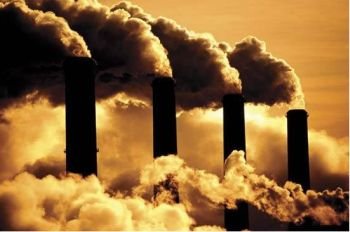
The pollutants we produce come from two types of sources. Point sources are single, identifiable sources. Examples are the smokestack of a coal-burning power or industrial plant, the drainpipe of a factory, and the exhaust pipe of an automobile.
Nonpoint sources are dispersed and often difficult to identify. Examples are pesticides blown from the land into the air and the runoff of fertilizers and pesticides from farmlands, lawns, gardens, and golf courses into streams and lakes. It is much easier and cheaper to identify and control or prevent pollution from point sources than from widely dispersed nonpoint sources.
Pollutants can have three types of unwanted effects. First, they can disrupt or degrade life-support systems for humans and other species. Second, they can damage wildlife, human health, and property. Third, they can create nuisances such as noise and unpleasant smells, tastes, and sights.
We can prevent pollution or clean it up
Suppose that smoke is coming out of the stack of a steel mill. We can try to deal with this problem by asking two entirely different questions. One question is “how can we clean up the smoke?” The other is “how can we avoid producing the smoke in the first place?” The answers to these questions involve two different ways of dealing with pollution. One is pollution prevention, or input pollution control, which reduces or eliminates the production of pollutants. The other is pollution cleanup, or output pollution control, which involves cleaning up or diluting pollutants after they have been produced.
Environmental scientists have identified three problems with relying primarily on pollution cleanup. First, it is only a temporary bandage as long as population and consumption levels grow without corresponding improvements in pollution control technology.
For example, adding catalytic converters to car exhaust systems has reduced some forms of air pollution. At the same time, increases in the number of cars and the total distance each travels have reduced the effectiveness of this cleanup approach.
Second, cleanup often removes a pollutant from one part of the environment only to cause pollution in another. For example, we can collect garbage, but the garbage is then burned (perhaps causing air pollution and leaving toxic ash that must be put somewhere), dumped on the land (perhaps causing water pollution through runoff or seepage into groundwater), or buried (perhaps causing soil and groundwater pollution).
Third, once pollutants become dispersed into the environment at harmful levels, it usually costs too much to reduce them to acceptable levels. Pollution prevention (front-of-the-pipe) and pollution cleanup (end-of-the-pipe) solutions are both needed. But environmental scientists, some economists, and some major companies want us to put more emphasis on prevention because it works better and in the long run is cheaper than cleanup.