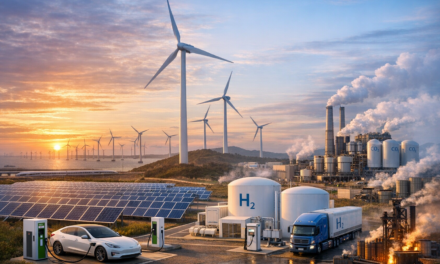

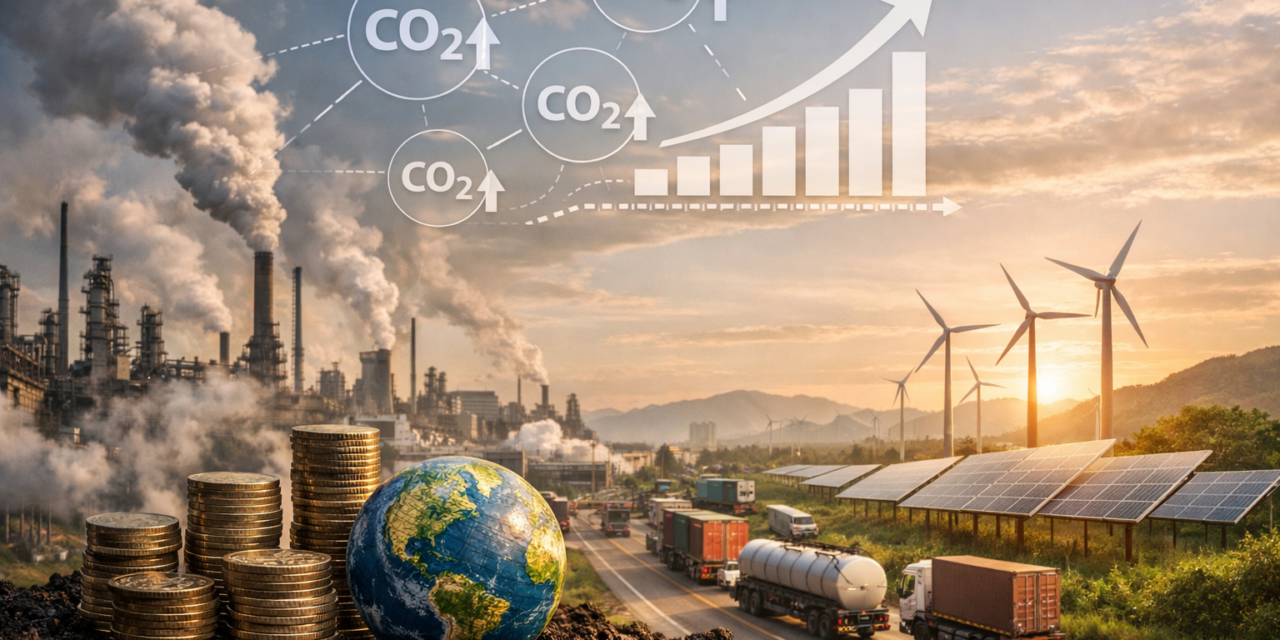
The escalating threat of climate change has necessitated a global re-evaluation of economic policies, with carbon pricing emerging as a central instrument in the fight against greenhouse gas emissions. Carbon pricing, in its essence, assigns a monetary cost to carbon pollution, incentivizing individuals and industries to reduce their emissions. This can take various forms, primarily through carbon taxes or emissions trading systems (ETS). As the world grapples with the urgency of climate action, the period leading up to 2026 marks a critical juncture for the expansion and reform of these pricing mechanisms. This essay will delve into the evolving landscape of carbon pricing, examining the key trends in its expansion and the ongoing reforms aimed at enhancing its effectiveness by 2026. We will explore the motivations behind this expansion, analyze the different approaches being adopted, discuss the challenges encountered, and highlight promising developments that are shaping the future of carbon pricing as a vital tool for a sustainable global economy.
The Rationale for Carbon Pricing Expansion
The drive to expand carbon pricing is rooted in a growing scientific consensus on the imperative of deep emissions reductions to avert the most catastrophic impacts of climate change. International agreements, such as the Paris Agreement, set ambitious targets for limiting global warming, and carbon pricing is recognized as a cost-effective means to achieve these goals. By internalizing the external costs of pollution – the damage to public health, ecosystems, and infrastructure caused by greenhouse gas emissions – carbon pricing creates a clear economic signal that encourages cleaner alternatives. The rationale for expansion is multifaceted. Firstly, it aims to achieve broader coverage, bringing more sectors and emissions sources under a pricing umbrella. As emissions continue to rise in some sectors, expanding coverage is seen as a necessary step to ensure comprehensive climate action. Secondly, there is a push to increase the stringency of existing carbon pricing mechanisms. This means raising the carbon price itself or tightening emissions caps in ETS to drive more significant reductions. Finally, the expansion also encompasses international cooperation, with a growing interest in linking different carbon pricing systems to create larger, more efficient carbon markets. This linkage can reduce compliance costs for businesses operating across borders and prevent “carbon leakage,” where emissions-intensive industries relocate to jurisdictions with less stringent climate policies. The overarching goal is to make polluting activities more expensive and low-carbon activities more competitive, fostering innovation and investment in green technologies.
Current Trends in Carbon Pricing Expansion
The expansion of carbon pricing is not a monolithic phenomenon; it manifests in diverse ways across different jurisdictions. One prominent trend is the growth of national and subnational ETS. China’s national ETS, launched in 2021, is the world’s largest by emissions coverage, and while still in its early stages, its expansion and refinement are closely watched. Similarly, Canada has implemented a federal carbon pricing system, and many of its provinces have their own cap-and-trade or carbon tax programs. In Europe, the European Union Emissions Trading System (EU ETS) continues to be a cornerstone of climate policy, with ongoing discussions and proposals to strengthen its ambition, including expanding its scope to new sectors like maritime transport and potentially buildings and road transport through a separate system. Beyond these large-scale systems, numerous countries are exploring or implementing carbon taxes. Germany, for instance, introduced a national carbon tax on heating and transport fuels, which it has committed to increasing incrementally. Other nations in Asia, Africa, and Latin America are also considering or piloting carbon pricing as part of their climate commitments. A significant development is the increasing focus on ensuring that carbon pricing is designed equitably. As carbon prices rise, concerns about regressive impacts on lower-income households become more pronounced. Therefore, many jurisdictions are exploring or implementing revenue recycling mechanisms, such as direct rebates to citizens, investments in public transport, or reductions in other taxes, to mitigate these impacts and build public support for carbon pricing. This focus on equity is crucial for the long-term sustainability and political viability of carbon pricing expansion.
Key Reforms to Enhance Effectiveness by 2026
Beyond sheer expansion, a critical focus by 2026 is on reforming existing and new carbon pricing mechanisms to ensure they are truly effective in driving emissions reductions. One of the primary reform areas is increasing the carbon price itself. Studies consistently show that a higher carbon price leads to greater emissions reductions. Therefore, many systems are moving towards pre-defined, increasing carbon price trajectories, providing businesses with greater certainty and a stronger incentive to invest in decarbonization. For ETS, this translates to tightening emissions caps over time, ensuring that the total amount of emissions allowed decreases at an accelerated pace. Another significant reform is the expansion of the scope of emissions covered. Initially, many carbon pricing systems focused on large industrial emitters. However, to meet ambitious climate targets, it is essential to cover a wider range of economic activities, including transportation, buildings, and agriculture. This often involves complex design challenges, such as monitoring, reporting, and verification of emissions from a more diverse set of sources. The reform agenda also includes strengthening the carbon market’s integrity and transparency. This involves measures to prevent market manipulation, ensure robust verification of emissions reductions, and improve data reporting to build trust and confidence in the system. Furthermore, reforms are aimed at integrating carbon pricing with other climate policies. Carbon pricing is most effective when it works in synergy with regulations, subsidies for clean technologies, and investments in research and development. By 2026, we expect to see more coordinated policy packages that leverage the strengths of carbon pricing while addressing market failures and accelerating the transition to a low-carbon economy. The inclusion of border carbon adjustments (BCAs) is also a notable reform trend. BCAs aim to level the playing field for domestic industries subject to carbon pricing by imposing a carbon cost on imported goods from countries with less stringent climate policies. This is intended to prevent carbon leakage and encourage other countries to adopt similar climate measures. The EU is at the forefront of developing and implementing a BCA mechanism, which could significantly influence global trade patterns and climate policy.
Challenges and Opportunities in Carbon Pricing Implementation
Despite the growing momentum, the expansion and reform of carbon pricing are not without their challenges. Political resistance is a significant hurdle. The perception of carbon pricing as a tax that increases costs for consumers and businesses can lead to public opposition and lobbying efforts from affected industries. Ensuring equitable distribution of costs and benefits is therefore paramount, as mentioned earlier. Effective communication and stakeholder engagement are crucial to build public understanding and acceptance. Another challenge lies in the technical design and implementation of carbon pricing systems. This includes accurately measuring and monitoring emissions, establishing appropriate price levels or emissions caps, and managing the complexities of carbon markets. For ETS, ensuring liquidity and preventing excessive price volatility are ongoing concerns. International coordination also presents challenges. Divergent national approaches to carbon pricing can create complexities for international trade and investment. Efforts to link different carbon pricing systems, while promising, require significant negotiation and harmonization of rules. However, these challenges also present opportunities. The need to address equity concerns can spur innovation in revenue recycling mechanisms, leading to policies that simultaneously support climate action and social well-being. The technical complexities of carbon pricing can drive advancements in data management, emissions accounting, and market oversight. Furthermore, the push for international linkage and coordination can foster greater global cooperation on climate change. The development of robust BCAs, while challenging, could create a powerful incentive for other nations to implement their own carbon pricing systems, leading to a more level global playing field for decarbonization efforts. The period leading up to 2026 is thus a crucial window for countries to learn from each other’s experiences, refine their policy designs, and build the necessary political will to overcome these obstacles.
Case Studies and Future Projections to 2026
Examining specific case studies provides valuable insights into the practical realities of carbon pricing expansion and reform. The EU ETS, for example, is continuously evolving. By 2026, its scope is expected to expand significantly to include maritime transport, and discussions are well underway for potential inclusion of buildings and road transport through a complementary ETS or carbon tax. The EU is also in the process of implementing its Carbon Border Adjustment Mechanism (CBAM), which will phase in by 2026, initially covering emissions-intensive sectors like steel, cement, and fertilizers. This landmark policy is likely to influence global trade and encourage other nations to strengthen their climate policies. In North America, Canada’s federal carbon pricing system, which includes a carbon tax and a benchmark for provincial ETS, is slated for further strengthening. British Columbia’s carbon tax, one of the oldest and most comprehensive, continues to be analyzed for its effectiveness in decoupling economic growth from emissions. In Asia, China’s ETS, while still nascent, is expected to expand its coverage to more industrial sectors and refine its trading mechanisms by 2026. Japan has implemented a unique “GX (Green Transformation) Economic Framework,” which includes a carbon tax and voluntary carbon offsetting mechanisms, with plans to transition to mandatory pricing by 2026. Looking ahead to 2026, the trajectory of carbon pricing is clearly one of increased ambition and broader reach. We can anticipate more countries adopting or strengthening carbon pricing mechanisms, driven by their updated Nationally Determined Contributions (NDCs) under the Paris Agreement. The focus will likely remain on enhancing the effectiveness of these policies through higher prices, wider coverage, and better integration with other climate instruments. The debate around revenue recycling and equity will continue to be central, with a growing emphasis on ensuring that carbon pricing is perceived as fair and beneficial for all segments of society. Furthermore, the development of international carbon markets and the potential for greater linkage between national systems will be key areas to watch. The period leading up to 2026 is therefore not just about implementing existing policies but about a proactive and adaptive approach to reforming and expanding carbon pricing to meet the urgent challenges of climate change.
Conclusion
The expansion and reform of carbon pricing by 2026 represent a critical and dynamic frontier in the global effort to address climate change. Driven by scientific imperatives and international commitments, a growing number of nations are embracing carbon pricing as a foundational element of their climate strategies. The trends observed in the lead-up to 2026 indicate a clear move towards broader coverage, increased stringency, and a greater focus on equity and international cooperation. While challenges related to political acceptance, technical implementation, and international coordination persist, they are increasingly being met with innovative solutions and a commitment to learning and adaptation. Reforms aimed at strengthening the effectiveness of carbon pricing, such as pre-defined price trajectories, expanded sectoral coverage, and the development of border carbon adjustments, are crucial for achieving ambitious emissions reduction targets. Case studies from around the world demonstrate both the potential and the complexities of these policies. As we approach 2026, the landscape of carbon pricing is set to become more comprehensive, more ambitious, and more integrated into the broader suite of climate policies. The ongoing evolution of carbon pricing, with its inherent capacity to internalize environmental costs and incentivize low-carbon innovation, underscores its indispensable role in navigating the transition to a sustainable and resilient global economy.
Bibliography
- World Bank. State and Trends of Carbon Pricing 2025. Washington, DC: World Bank Group, 2025.
- OECD. Effective Carbon Rates 2024: Pricing Carbon Emissions Through Taxes and Emissions Trading. Paris: OECD Publishing, 2024.
- International Monetary Fund. Carbon Pricing and the Just Transition: Policy Design for Equity and Efficiency. IMF Policy Paper, 2025.
- European Commission. EU Emissions Trading System (EU ETS) Reform 2024–2026: Legislative Package and Implementation Roadmap. Brussels: European Union, 2025.
- IPCC. Sixth Assessment Report (AR6): Mitigation of Climate Change. Geneva: Intergovernmental Panel on Climate Change, 2022–2023.
- International Energy Agency. Energy Transitions and Carbon Markets: Global Outlook 2025. Paris: IEA, 2025.
- Government of Canada. Federal Carbon Pricing Backstop: 2024–2026 Update. Ottawa: Environment and Climate Change Canada, 2025.
- Ministry of Ecology and Environment of China. China National ETS Expansion Plan 2024–2026. Beijing: MEE, 2025.
- Japan Ministry of Economy, Trade and Industry. GX (Green Transformation) Carbon Pricing Framework. Tokyo: METI, 2025.
- United Nations Environment Programme. Emissions Gap Report 2025. Nairobi: UNEP, 2025.
References:
https://pmc.ncbi.nlm.nih.gov/articles/PMC11791185/
https://www.mdpi.com/2071-1050/17/23/10599
https://dergipark.org.tr/en/download/article-file/3635250
https://people.climate.columbia.edu/projects/view/2192
https://www.mdpi.com/1996-1073/18/5/1030
https://pmc.ncbi.nlm.nih.gov/articles/PMC11791185/
https://www.mdpi.com/2071-1050/17/23/10599
https://dergipark.org.tr/en/download/article-file/3635250
https://people.climate.columbia.edu/projects/view/2192
https://www.mdpi.com/1996-1073/18/5/1030
https://www.nature.com/articles/s43247-026-03495-y
https://www.frontiersin.org/journals/sustainability/articles/10.3389/frsus.2026.1732459/full
https://www.tandfonline.com/doi/full/10.1080/14693062.2026.2627746