VIDEO
How is Albedo Related to Global Warming?
Albedo
Introduction
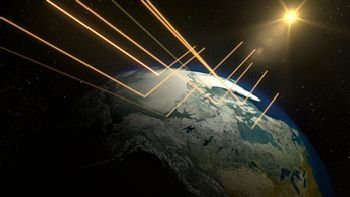
The albedo of an object or material is its tendency to reflect light. A bright, highly reflective surface, such as fresh snow, has a high albedo; a dark surface, such as asphalt, absorbs light and thus has a low albedo.
Albedo is generally expressed as the fraction of incident light-the amount of light coming from the sun or some other source-that a surface reflects, with values ranging from zero (no reflection) to one (total reflection). Decreases in Earth’s albedo brought on by melting snow, vegetation shifts, and other factors can exacerbate global warming, especially at high latitudes.
Historical Background and Scientific Foundations
Earth’s albedo can be measured locally on the ground and used in computer models to predict large-scale effects, or measured on a broader scale using satellites
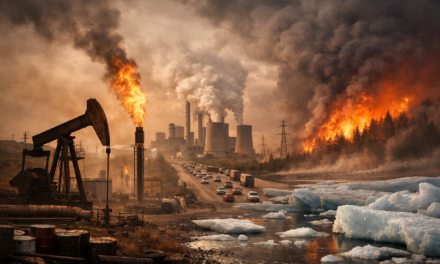
and observations of earthshine, that is, light reflected or ground that more readily absorb solar radiation. This lowered surface albedo promotes warming that melts more snow and ice, promoting still more warming, and so on. Shrinking snow cover has played a significant role in the increasingly early onset of spring at high latitudes over the past several decades.
Changes in vegetation communities brought on by global warming, such as the advance of treeline to higher altitudes and latitudes and the loss of tundra to forests and shrub lands, may also be darkening formerly bright, snowy expanses at high latitudes, increasing regional warming.
Human land-use practices can also change albedo. Particulate matter like dust kicked up from heavily grazed areas, deforested areas, farmland, growing deserts, new housing developments, and other impacted environs, as well as soot from the burning of fossil fuels, can collect on snow and ice and cause it to melt more quickly. Scientists from the National Snow and Ice Data Center in Boulder, Colorado, found that a single event spreading dust over the surface could cause snow to melt from a Rocky Mountain basin 18 days earlier than it would if the snow was dust-free. Changes to snowmelt regimes in mountain ranges around the world may lead to destructively powerful spring runoff as well as water shortages.
Words to Know Earthshine
Earthshine: Sunlight reflected from Earth and illuminating some other body, such as a spacecraft or the moon. The side of the moon that always faces Earth is illuminated by earthshine; by measuring the brightness of portions of the moon that are lit only by earthshine, the reflectivity (albedo) of Earth can be measured.
Fossil Fuels: Fuels formed by biological processes and transformed into solid or fluid minerals over geological time. Fossil fuels include coal, petroleum, and natural gas. Fossil fuels are non-renewable on the timescale of human civilization, because their natural replenishment would take many millions of years.
Incident Light: Light arriving at the surface of an object (for example, Earth).
Runoff: Water that falls as precipitation and then runs over the surface of the land rather than sinking into the ground.
Sea Ice: Ice that forms from the freezing of ocean water. As the salt water freezes, it ejects salt, so sea ice is fresh, not salty. Sea ice forms in relatively thin layers, usually no more than 3–7 ft (1–2 m) thick, but it can cover thousands of square miles of ocean in the Polar Regions.
Treeline: The highest-altitude (or highest-latitude) line along which trees can grow. As climate warms, tree lines advance to higher altitudes and latitudes.
Tundra: A type of ecosystem dominated by lichens, mosses, grasses, and woody plants. It is found at high latitudes (arctic tundra) and high altitudes (alpine tundra). Arctic tundra is underlain by permafrost and usually very wet.
See Also: Arctic Melting: Greenland Ice Cap; Arctic Melting: Polar Ice Cap; Global Warming; Solar Illumination; Soot.
Bibliography
Books:
Lemke, P., et al. ‘‘Observations: Changes in Snow, Ice and Frozen Ground.’’ In Climate Change 2007: The Physical Science Basis. Contribution of Working Group I to the Fourth Assessment Report of the Intergovernmental Panel on Climate Change, edited by S. Solomon, et al. New York: Cambridge University Press, 2007.
Periodicals:
Chapin , F. S. III, et al. ‘‘Arctic and Boreal Ecosystems of Western North America as Components of the Climate System.’’ Global Change Biology 6 (2000): 211-223.
Curry, Judith A., and Julie L. Schramm. ‘‘Sea Ice-Albedo Climate Feedback Mechanism.’’ Journal of Climate 8 (1995): 240-247.
Karl, Thomas R., and Kevin E. Trenberth. ‘‘Modern Global Climate Change.’’ Science 302 (2003): 1719-1723.
Nijhuis, Michelle. ‘‘Dust and Snow: High in the Snowy San Juan Mountains, Tiny Particles Have Big Implications.’’ High Country News (May 29, 2006).
Soja, Amber J., et al. ‘‘Climate-induced Boreal Forest Change: Predictions Versus Current Observations.’’
Global and Planetary Change 56 (2007): 274-296.
Web Sites:
‘‘Albedo.’’ Arctic Coastal Ice Processes, October 26, 2006. http://www.arcticice.org/albedo.htm (accessed April 17, 2013).
Britt, Robert Roy. ‘‘Baffled Scientists Say Less Sunlight Reaching Earth.’’ Live Science, January 24, 2006 http://www.livescience.com/577-baffled-scientists-sunlight-reaching-earth.html(accessed April 17, 2013).
‘‘Scientists Watch Dark Side of the Moon to Monitor Earth’s Climate.’’ American Geophysical Union News, April 17, 2001 http://www.agu.org/news/press/pr_archives/2001/prrl0113.html (accessed April 17, 2013).