
VIDEO
The Future of Cost-Benefit Analysis in Environmental Policy
Environment and Economics
Cost benefit analysis
One of the key bureaucratic tools to emerge out of the centrality of economics to environmental policy is cost benefit analysis (CBA).
CBA, although often more flexible than this might suggest, basically involves a comparison of the economic costs and benefits of proposed regulations, projects or policies. In theory, and to simplify, only measures that are demonstrated to be efficient, that is to create more benefit than cost, are pursued: ‘The basic rule is not to sanction anything where the costs exceed the benefits’; beyond that, ‘we aim to choose the option that maximizes the difference between benefits and costs’.42 Even if one disputes the suitability of ‘efficiency’ as a social goal,43 information on costs and benefits of particular activities may nevertheless be useful when difficult decisions are to be made.
Sunstein, Risk and Reason, p. 291
. . . cost-benefit analysis emerges as a natural step, one that can help overcome many of the problems we face in assessing risks. The great virtue of cost-benefit analysis is that it promotes a better understanding of the actual consequences of regulation. When availability bias makes people excessively concerned with trivial risks, cost-benefit analysis is a useful corrective. When the public is becoming fearful of an imaginary danger, but neglecting real dangers in daily life, an effort to tabulate the costs and benefits can overcome both panic and neglect. When regulation actually increases the very risks that it is designed to reduce, an understanding of health–health tradeoffs can be a valuable corrective. I have urged that in attempting to clean the air, the Environmental Protection Agency should be as quantitative as possible. This is not because the numbers tell us nearly everything that we need to know, but because, without the numbers, we do not know nearly enough.
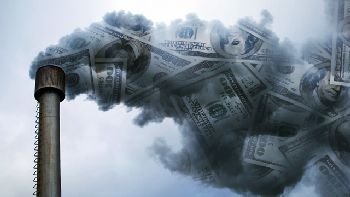
In principle, all manner of considerations can be incorporated into a CBA, not just goods that we familiarly value in money. And CBA need not be wholly quantitative, but can include qualitative assessments (e.g. by narrative description) of different options.44 Putting a monetary value on the environment, however, is said to help environmental goods stand up to comparison with more immediate economic benefits. Calculating that value is of course difficult.
Pearce and Barbier, Blueprint for a Sustainable Economy, p. 8
The underlying value judgement in economics is that resources should be allocated according to what people want. This is the notion of consumer sovereignty or, as it might better be termed, individual sovereignty. These wants, or preferences, are revealed directly where there is a market place. People vote for a product by buying it. Some preferences are revealed in market places which do not appear, at first sight, to have much to do with the environment.
For example, the housing market is about the demand and supply of houses. But houses are bundles of characteristics, and the environment surrounding the house is one such characteristic. So the demand for that environment is very likely to show up in the demand for houses. This is a form of indirect market. In many cases there may be no direct or indirect markets, so it is necessary to elicit preferences through hypothetical markets, for example by asking what people are willing to pay.
The motives for preferences can be varied and include:
• Pure self-interest: wanting something now;
• Future self-interest: wanting something to be conserved in case we wish to use it later;
• Altruism: wanting something to be conserved or made available because others want it;
• Bequest: a form of altruism, wanting something to be conserved so our children or future generations can use it;
• Existence: wanting something to be conserved even though we make no use of it now, nor intend to in the future. This motive will capture some of the intrinsic value of the environment since individuals may be judging what the environmental asset wants.
In principle, then we can measure preferences by what people are, or say they are, willing to pay. This willingness to pay is a measure of economic value.
CBA is a controversial tool of environmental protection at many different levels, and we will return to this in Section 4 below. At the very least, estimates of ‘willingness to pay’ are fraught with uncertainty; different approaches to the calculation can lead to vastly different results.45More fundamental concerns relate to the very exercise of ‘pricing’ environmental goods.
Frank Ackerman and Lisa Heinzerling, Priceless: On Knowing the Price of Everything and the Value of Nothing (New Press, 2004), pp. 8–9
The basic problem with narrow economic analysis of health and environmental protection is that human life, health, and nature cannot be described meaningfully in monetary terms; they are priceless. When the question is whether to allow one person to hurt another, or to destroy a natural resource; when a life or a landscape cannot be replaced; when harms stretch out over decades or even generations; when outcomes are uncertain; when risks are shared or resources are used in common; when the people ‘buying’ harms have no relationship with the people actually harmed – then we are in the realm of the priceless, where market values tell us little about the social values at stake.
There are hard questions to be answered about protection of human health and the environment, and there are many useful insights about these questions from the field of economics. But there is no reason to think that the right answers will emerge from the strange process of assigning dollar values to human life, human health, and nature itself, and then crunching the numbers. Indeed, in pursuing this approach, formal cost-benefit analysis often hurts more than it helps: it muddies rather than clarifies fundamental clashes about values. By proceeding as if its own assumptions are scientific and by speaking a language all of its own, economic analysis too easily conceals the basic human questions that lie at its heart and excludes the voices of people untrained in the field. Again and again, economic theory gives us opaque and technical reasons to do the obviously wrong thing. Obscuring the fundamental issues with talk of wage premiums and protest votes … , cost-benefit analysis promotes a deregulatory agenda under the cover of scientific objectivity.
To say that life, health, and nature are priceless is not to say that we should spend an infinite amount of money to protect them. Rather, it is to say that translating life, health, and nature into dollars is not a fruitful way of deciding how much protection to give them.
A different way of thinking and deciding about them is required.
42. David Pearce and Edward B. Barbier, Blueprint for a Sustainable Economy (Earthscan, 2000), p. 54.
43. See the different approaches in Laurence Tribe, ‘Ways Not to Think About Plastic Trees: New Foundations for Environmental Law’ (1974) 83 Yale Law Journal 1315; Mark Sagoff, The Economy of the Earth: Philosophy, Law and the Environment (Cambridge University Press, 1988); Ronald Dworkin, ‘Is Wealth a Value?’ (1980) 9 Journal of Legal Studies 191.
44. See the economics review of genetically modified organisms (GMOs), Ch. 2, p. 79.
45. See, for example, the debated gains of improving visibility at the Grand Canyon: Mark Sagoff, ‘Cows Are Better Than Condos, Or How Economists Help Solve Environmental Problems’ (2003) 12 Environmental Values 449, p. 458; see also the extracts from Macrory, Ch. 11, pp. 423–5.