
VIDEO
Association of Southeast Asian Nations (ASEAN)
Association of South-East Asian Nations (ASEAN) – Website
Association of South-East Asian Nations (ASEAN)
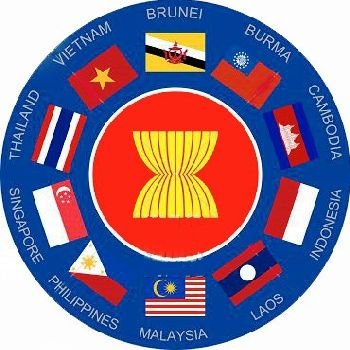
Formed initially in 1967, the association today comprises Brunei, Cambodia, Indonesia, Laos, Malaysia, Myanmar, the Philippines, Singapore, Thailand and Vietnam, with a combined population of over 500 million.
ASEAN promotes trade and regional security, facilitating the settling of disputes between members and promoting joint ventures within the region. ASEAN has been working towards the establishment of a common market by 2003 by phasing in tariff reductions and promoting economic growth around the region.
In 1985, ASEAN reached an Agreement on the Conservation of Nature and Natural Resources. The aim was to promote joint and individual state action for the conservation and management of natural resources within the ASEAN region, promoting sustainable development, preserving genetic diversity, promoting soil conservation and environment protection, reversing environmental degradation, creating national parks and reserves, and promoting harmonious cooperation. The agreement was endorsed by Brunei, Indonesia, Malaysia, the Philippines, Singapore, and Thailand.
In 1995, ASEAN agreed to declare the region a nuclear-free zone, banning the testing, storage and sitting of nuclear weapons in the region. The treaty was part of a regional effort to stop France and China exploding devices.
The Kuala Lumpur Accord of 1990 reached by the ASEAN
Ministers for the Environment in 1997, ASEAN approved a Regional Haze Action Plan to address the problems of smoke haze in the region, caused by land and forest fires. Box 2 Kuala Lumpur Accord on Environment and Development issued by the ASEAN Ministers for the Environment at the Fourth ASEAN Meeting of Ministers for the Environment in Kuala Lumpur, Malaysia, 19 June I990
Aware, that the management of the environment and the pursuit of sustainable development are imperative to secure the well-being of the people of ASEAN today and in the future, further aware, that the management of the environment and the pursuit of sustainable development require close co-operation between the member-countries of ASEAN in particular and global co-operation in general, and that ASEAN should endeavor to strengthen such co-operation.
Conscious, that the United Nations Conference on Environment and Development, to be held in 1992, provides a forum and an opportunity t o further promote such co-operation and for ASEAN to assert its views on environmental management and sustainable development,
Recognizing, that the formulation of such views and practices would require preparatory steps and studies, jointly as well as separately,
Also recognizing that in such formulation, it would be beneficial to take note of:
The Manila Declaration of I98 I
The Bangkok Declaration of 1984
The Jakarta Resolution of 1987
The Manila Summit Declaration of I987 and
The Langkawi Declaration of 1989,
We the ASMN Ministers for the Environment hereby agree
I. To initiate efforts leading towards concrete steps pertaining to environmental management, including:
A. The formulation of an ASEAN strategy for sustainable development and a corresponding action programme,
B. The harmonization of environmental quality standards,
C. The harmonization of transboundary pollution prevention and abatement practices,
D. The undertaking of research and development and the promotion of the use of clean technologies.
2. To initiate efforts leading towards concrete steps pertaining to natural resource management, including:
A. The harmonization of approaches in natural resource assessment,
B. the development of joint natural resource management programmes,
C. the development and harmonization of procedures aimed at obtaining a better reflection of the state of natural wealth in the context of the System of National Accounts.
To initiate efforts enabling the inclusion of environmental factors into economic calculations and thus providing a better base for international economic co-operation.
To develop and formulate a common ASEAN position to be presented to the Ministerial Level Conference on the Environment for Asia and the Pacific and later to the United Nations Conference on Environment and Development in 1992, including:
A. Affirming ASEAN’s commitment to the pursuit of sustainable development,
B. Stressing the need to strengthen regional and international co-operation and proposing the principles upon which such co-operation should be based,
C. Emphasizing the importance of a global environmental agenda which reflects the priorities and concerns of all countries,
D. Calling attention to the patterns of international relations that inhibit the implementation of national environmental efforts in developing countries and their participation in global environmental efforts,
E. Reiterating the urgency for a supportive and predictable international economic environment which promotes economic growth and development of all countries,
F. Stressing the need for equitable sharing of responsibilities and allocation of liabilities in global environmental efforts,
G. Stressing that although global environmental efforts will benefit the common good, such benefits should be shared equitably, including the benefits of Research and Development,
H. Underlining the need for substantial additional resources to assist developing countries to pursue their goals of sustainable development as well as access to, and transfer of, environmentally sound technologies a t affordable costs and the establishment of appropriate funding mechanisms.