
ISO 14001 Environmental Management Certification Accreditaion
STRATEGIES YOU CAN USE (6)
Product certification
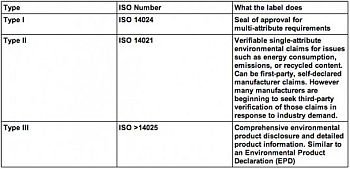
A number of third-party certification systems intended to give purchasers certain assurances about the products they buy are being developed for natural-resource-based products.
These may include aspects of both the product itself and the way it is manufactured or harvested. Some even take into account the social impacts of the operation on the surrounding communities. In agriculture, ‘organic’ has been defined by the US Department of Agriculture, but other labeling systems exist such as that of the Food Alliance, which allows some pesticide use but emphasizes social and other factors.
Green Seal certifies a wide range of mostly household products – cleaners, showerheads and paper towels – and also alternative fuel vehicles. They also have programmes for government and the hospitality industry. Wood products may be certified, most commonly by the Forest Stewardship Council or the Sustainable Forest Initiative. Similar schemes are emerging for fisheries and other natural resources. The construction industry has LEED, which stipulates tiers of building performance.
If you are in a natural-resource-intensive industry, you will need to evaluate the relevant certification options for your products. Typically, the costs associated with third-party certifications can be high. Maintaining a chain of custody can be complicated if your business is not vertically integrated (eg if you don’t grow and process your own trees). But the absence of certification may lock you out of certain markets, especially in the European Union or certain Asian countries (Japan, for example).
Non-governmental organizations have been targeting the major retailers of certain products. For example, the Rainforest Alliance targeted Home Depot, which sells a large percentage of timber in the US. Once educated about the issues (the hard way), Home Depot made a commitment to give preference to certified wood products. At the time, they had trouble finding an adequate supply. Still, very quietly, without waving a green flag in front of customers or giving them green options, they have been identifying the source of all their wood (from 2 × 4s to hammer handles) and taking off the shelves products with wood from illegal, ecologically sensitive or over-harvested sources. It is actions like these that led the infamous Indonesian timber giant, Sumalindo Lestari Jaya, known for its rapacious forest practices and devastating impacts on indigenous peoples, to partner The Nature Conservancy for fear they would lose out entirely on US and European markets. If you are not in a natural-resource-intensive industry, you can still purchase certified products. While they may cost more, this not only builds the market for the certified products but may also provide you with opportunities for new, higher margin profit lines. For example, Neil Kelly Company, a design/build firm specializing in residential remodels in Portland, Oregon, got virtually all their income locally. When they started looking into sustainability and networking with other companies with the same interest, they developed a line of sustainable furniture using wood from the Collins Company, the first timber company in the US to have all their forests certified. Today, in addition to their local remodeling business, they sell furniture to customers across the country, giving them access to a market they could never have tapped under their traditional business model.
Resources
‘Forging New Links: Enhancing Supply Chain Value through Environmental Excellence’, Global Environmental Management Initiative (GEMI).
The Pollution Prevention Resource Center provides an overview of the topic as well as links to resources, http://pprc.org/?s=Sustainability&x=0&y=0
Hitchcock, Darcy (2004) Partnering with Vendors: Supplier Workshops for Mutual Gain.
Portland, OR: AXIS Performance Advisors. Part of the Sustainability Series™, http://www.axisperformance.com.
‘Suppliers’ Perspectives on Greening the Supply Chain’, Business for Social Responsibility, http://www.bsr.org.
‘The Lean and Green Supply Chain’, US Environmental Protection Agency, http://www.epa.gov/wastewise.
Going Green, Upstream: The Promise of Supply Chain Environmental Management (2001), Washington, DC: National Environmental Education and Training Foundation (NEETF), http://www.neetf.org
General information can be found at the Consumer Reports eco-label website, http://www.eco-label.org/home.cfm.