
Where Does The Sun Get Its Energy?
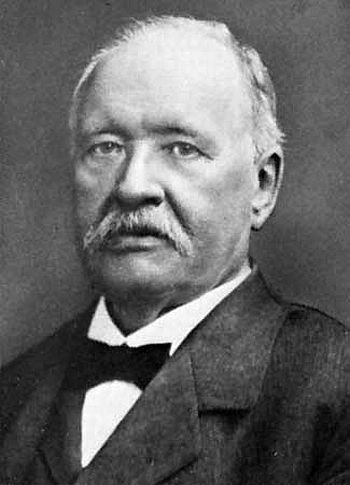
Svante Arrhenius calculated how carbon dioxide in the atmosphere affects the earth’s temperature.

How the Sun Warms the Earth
Radiation-How the sun sends energy to the earth
What Is Sunlight?
The sun tirelessly provides an average of about 1370 W of power (in the form electromagnet radiation to every square meter of surface it strikes. This amount of solar power is called the solar constant because is does not change except for minor variations.
Blue light wavelength = 0.45–0.49 micrometer
Red light wavelength = 0.62–0.78 micrometer
Infrared light wavelength greater than 0.78 micrometer
Wavelength-the difference between blue light and red light.
Energy from the sun is received in the form of light waves. Light is an electromagnetic wave. The frequency of the light-or how fast the waves vibrate-determines the different colors of the light. Blue light waves vibrate more vigorously than do red light waves. Since the waves of blue light vibrate faster, they are closer together. If the waves are closer together, they are said to have a shorter wavelength. Blue light has a shorter wavelength than red light. The light hitting the earth from the sun is a mix of visible light and the invisible infrared and ultraviolet components of the spectrum. Most of the light energy coming to the earth from the sun is in the middle of the spectrum, midway between blue and red. There is more green light than either red or blue light in the spectrum of light coming from the sun.
Since the sun’s temperature is around 6000°C (10,800°F), it glows-not quite “white hot” but with a yellowish average color. The heating element of an electric stove, by comparison, might reach 800°C (1470°F) and have a reddish glow. As the earth is heated, it also glows in its own way. However, the earth is at a much colder temperature than the sun, namely, 14.4°C (58°F) at the surface to –19°C (–2°F) at the top of the atmosphere. For this reason, the earth’s “glow” is infrared. (Joseph Fourier called the radiative energy coming from earth “dark heat.”) This is not light reflected from the earth. Rather, it is light that is absorbed and then reradiated. All objects that are above absolute zero in temperature emit this type of radiation. The distribution of infrared radiation coming from the earth that is measured by satellites is not quite as smooth and uniform as this graph for a very important reason.
Living in a Greenhouse
The idea of a greenhouse is for light to pass through the glass. This light then is absorbed by the objects it strikes. The heated objects then reradiate infrared light, which cannot pass through glass.
In 1829, the French physicist and chemist Joseph Fourier developed a concept for how planets such as the earth maintain a steady temperature. He proposed that not only do planets receive energy from the sun, but they also radiate heat back into space. By suggesting that gases in the atmosphere increase the temperature of the earth, Fourier came up with the idea that became known as the greenhouse effect.
Like a greenhouse, the earth receives energy from the sun. The atmosphere is like a clear pane of glass, and most of the light passes through it without being absorbed. British physicist John Tyndall, working in the 1860s, studied absorption of light by different gases, including coal gas, carbon dioxide, and water vapor. Tyndall showed that visible light passes fairly well through carbon dioxide but that infrared light is very strongly absorbed. He saw this as possible cause of climate change and a possible explanation for the advance and retreat of glaciers. The two gases that make up most of our atmosphere, oxygen and nitrogen, do not absorb much light in either the visible or the infrared range. Carbon dioxide and other infrared-absorbing gases let visible light come through but trapped heat-producing infrared light. In 1896, the Nobel Prize-winning Swedish chemist Svante Arrhenius turned his attention to understanding what might have caused the ice ages that have come and gone throughout the earth’s geologic past. Fossil records showed that ice covered the earth as far south as Germany and Illinois as recently as 12,000 years ago. Drawing on Tyndall’s and Fourier’s discoveries, Arrhenius proposed that carbon dioxide released by ancient volcanoes resulted in the earth growing 20–30°C (68–86°F) warmer as a result of the greenhouse effect. He theorized that the decrease of carbon dioxide in the atmosphere between periods of volcanic activity resulted in the cooling periods that brought on the ice ages.
Arrhenius estimated that decreasing the amount of carbon dioxide by half (and taking into account the reduction of water vapor in the air at that lower temperature) would cause a drop in global temperatures of 4–5°C (7–9°F). Similarly, he predicted that doubling the carbon dioxide level would increase the earth’s temperature by 5–6°C (9–11°C). By comparison with the more sophisticated climate models used today, Arrhenius’ estimates are a little beyond the most pessimistic of today’s projections. Today’s estimates put the increase from a doubling of carbon dioxide levels at closer to 2–4.5°C (3.6–8.1°F).
Arrenhius was successful in identifying the relationship between carbon dioxide and global warming that is the basis of what is called the greenhouse effect. Although he was not correct in providing an explanation for the cause of the ice ages, he laid the foundation for developing a quantitative model to determine how a change in the concentration of carbon dioxide could affect the atmospheric temperature.
In 1938, Guy Stewart Callendar, a British coal engineer, analyzed temperature measurements taken from weather stations and concluded that the average temperature of the atmosphere was increasing. He attributed this rise in temperature to the buildup of carbon dioxide in the atmosphere as a result of burning fossil fuels.
What Happens to the Sun’s Energy When It Gets to the Earth?
This is how it works:
1. Light comes from the sun. About 1370 W of power strikes every square meter of (perpendicular) surface. Half the earth is facing away from the sun at any given time. In addition, taking into account the curvature of the earth results in an average of one-quarter of the sun’s full energy striking the earth continuously. This result in 342 W on average striking every square foot of surface of the earth.
2. The top of the atmosphere, clouds, and earth’s surface reflect slightly more than 30 percent of the incoming light. The reflected amount may increase if particulates are in the air as a result of volcanic activity. Human-generated pollution also can enhance the amount of reflected light. The remaining 70 percent or so of the incoming light passes through the atmosphere.
3. In the stratosphere, ozone absorbs some of the (short wavelength) ultraviolet light. Water vapor and other gases in the troposphere also absorb some selected colors (wavelengths) from the incoming visible light.
4. Whatever light energy that remains at this point is absorbed by the earth’s surface. It heats up land and, in turn, the atmosphere. It drives photosynthesis in plants. It warms the oceans. It melts ice and evaporates water.
5. If the temperature of the earth were absolute zero, it would not radiate heat. However, the temperature of the earth actually is a little above 14°C (58°F). This is not hot enough for the earth to glow visibly, but it does give the earth an invisible thermal presence that radiates infrared light back through the atmosphere. The atmosphere, which is at around –19°C (2°F), also radiates infrared light.
6. Some of the infrared light that the earth radiates is absorbed in the troposphere. Carbon dioxide absorbs selected wavelengths. Water vapor, nitrous oxide, and other gases absorb their particular wavelengths. The infrared energy absorbed in the greenhouse gases of the troposphere causes it to be at a higher temperature.