Atmosphere
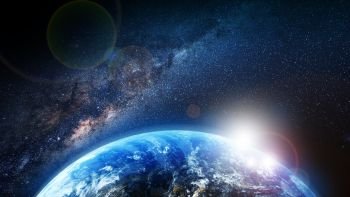
The atmosphere of the Earth is the key to life development on this planet. Other planets in our solar system either have hydrogen, methane, and ammonia atmospheres (Jupiter, Saturn), a carbon dioxide and nitrogen atmosphere (Venus, Mars), or no atmosphere at all (Mercury).
The atmosphere of the Earth, belched out from prehistoric volcanoes, extends nearly 563 kilometers (350 miles out) from the solid surface of theEarth. It is made up of a mixture of different gases that combine to allow life to exist on the planet.
In the lower atmosphere, nitrogen is found in the greatest amounts, 78%, followed by oxygen at 21%. Carbon dioxide, vital to the growth of plants, is present in trace levels of atmospheric gases along with argon and a sprinkling of neon and other minor gases. In the atmosphere have big differences between the amounts of gases present.
Oxygen, critical to human life, developed as microscopic plants and algae began using carbon dioxide in photosynthesis to make food. From that process, oxygen is an important by-product.
The mixture of gases we call, air, penetrates the ground and most openings in the Earth not already filled with water. The atmosphere is the most active of the different ‘‘spheres.’’ It presents an ever changing personality all across the world. Just watch the nightly weather report in your own area to see what I mean. In fact, you can see what the weather is doing around the world by visiting the following websites:
We will see all the factors that work together to keep us breathing when we talk about the atmosphere.
25.02.2013