Hydrosphere
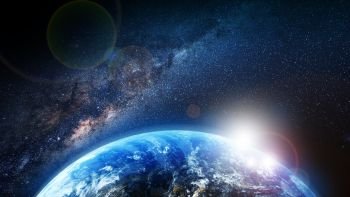
The global ocean, the Earth’s most noticeable feature from space, makes up the largest single part the planet’s total covering.
The Pacific Ocean, the largest of Earth’s oceans, is so big that all the landmass of all the continents could be fit into it. The combined water of the oceans makes up nearly 97% of the Earth’s water.
These oceans are much deeper on average than the Earth is high. This large mass of water is part of the hydrosphere. The hydrosphere describes the ever changing total water cycle that is part of the closed environment of the Earth.
The hydrosphere is never still. It includes the evaporation of oceans to the atmosphere, raining back on the land, flowing to streams and rivers, and finally flowing back to the oceans.
The hydrosphere also includes the water from underground aquifers, lakes, and streams. The cryosphere is a subset of the hydrosphere. It includes all the Earth’s frozen water found in colder latitudes and higher elevations in the form of snow and ice. At the poles, continental ice sheets and glaciers cover vast wilderness areas of barren rock with hardly any plant life. Antarctica makes up a continent two times the size of Australia and contains the world’s largest ice sheet.